
Why Study Rook Endings?
The most common ending of all is rook vrs rook endingsWhy Study Rook Endings?
By NM Donny Gray
Chess students probably get tired of hearing their coaches go on and on about studying rook endings. Why study rook endings? Why do coaches constantly harp on the rooks? The other day I found an interesting table of a break down of possible endings. Out of the top ten most common endings, rooks are in seven of them! And in fact, rooks are in 17 out of 33 on the list!!
As you can see in the chart below, the most common ending of all is rook vrs rook endings coming in at over 8% of games played.
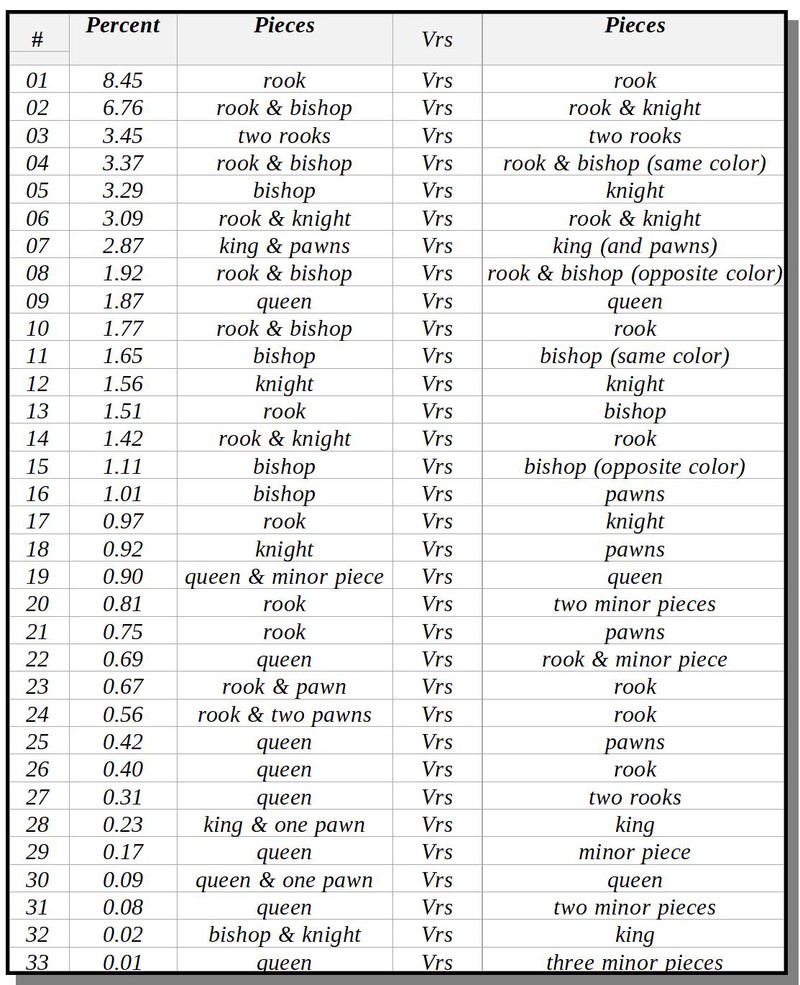
So what does this mean to a chess player? It means your chess coach is right!! The more you study endings with rooks in them, the better you will become.
Some of the most famous books written about this subject include:
Rook Endings by Levenfish & Smyslov (224 pages)
Secrets of Rook Endings by John Nunn (352 pages)
Volume 2 of the Encyclopedia of Chess Endings devotes 92 pages to rook endings!!
Now lets review some of the most famous and important rook endings.
First up is the basic king a rook mate. If you take lessons from me, the first thing I find out is can you mate with a king and queen and if can you mate with a king and rook. If you can not, we work on those two items until you can. It is my belief if you have to think very much at all doing these two basic mates then you really don’t know them as well as you should. Twenty seconds on the clock is all you should need to do either one of them.
A basic rook check mate will look something like the following two examples:
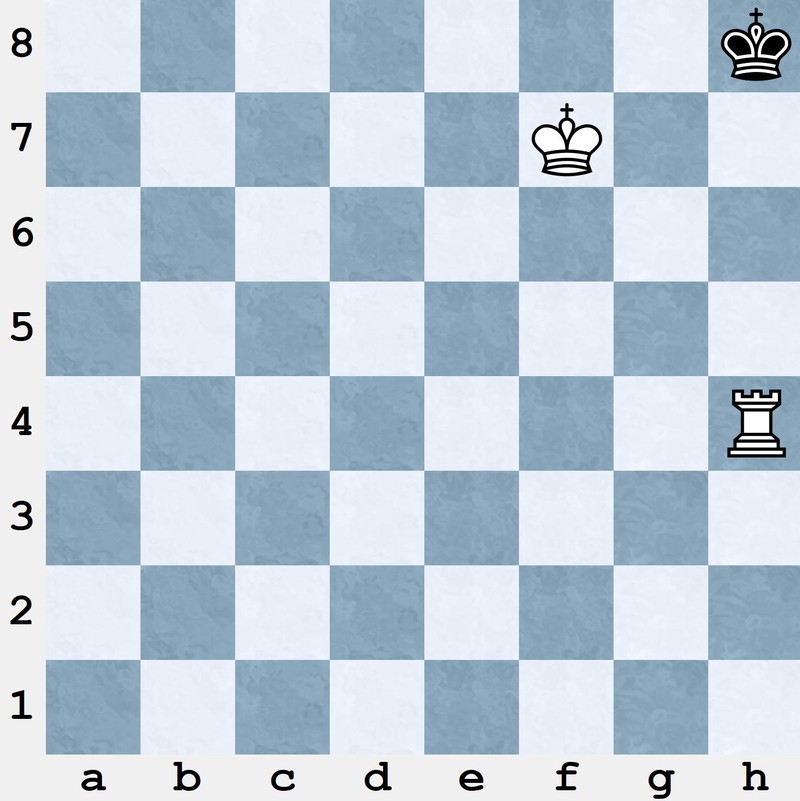
The black king is mated in the corner.
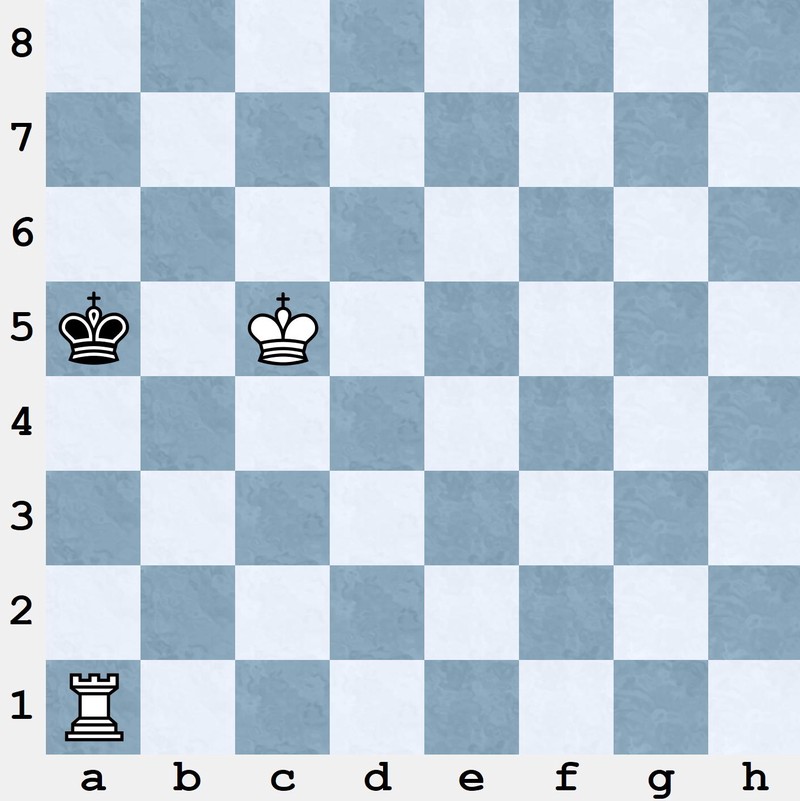
The black king is mated on the edge of the board.
Now a brief look at some of the more advanced rook endings. Let’s start with what is known as Philidor’s Position.
Philidor's position demonstrates an important drawing technique in rook endgames. It works when the defending king is in front of the pawn and the attacking king and pawn have not reached their sixth rank. Black keeps his rook on his third rank to keep the white king from reaching that rank.
White can try but he can’t win.
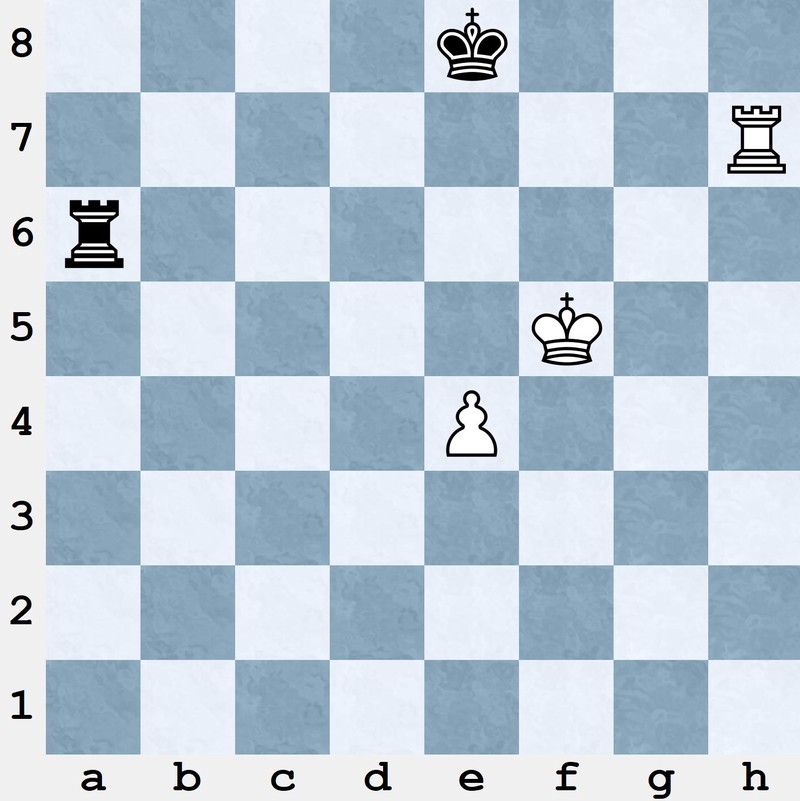
1.e5 Rb6
2.e6 Rb2
3.Kf6 Rf2+
4.Ke5 Re2+
White can not get away from the checks. Another try might go:
1.e5 Rb6
2.Ra7 Rc6
3.Ra8+ Kf7
4.Ra2 Ke8
White can make no progress.
If he pushes the pawn
5.e6 Rc1!
And black prepares for infinite checks as in the 1st try.
Our next example can occur very frequently and is good to know.
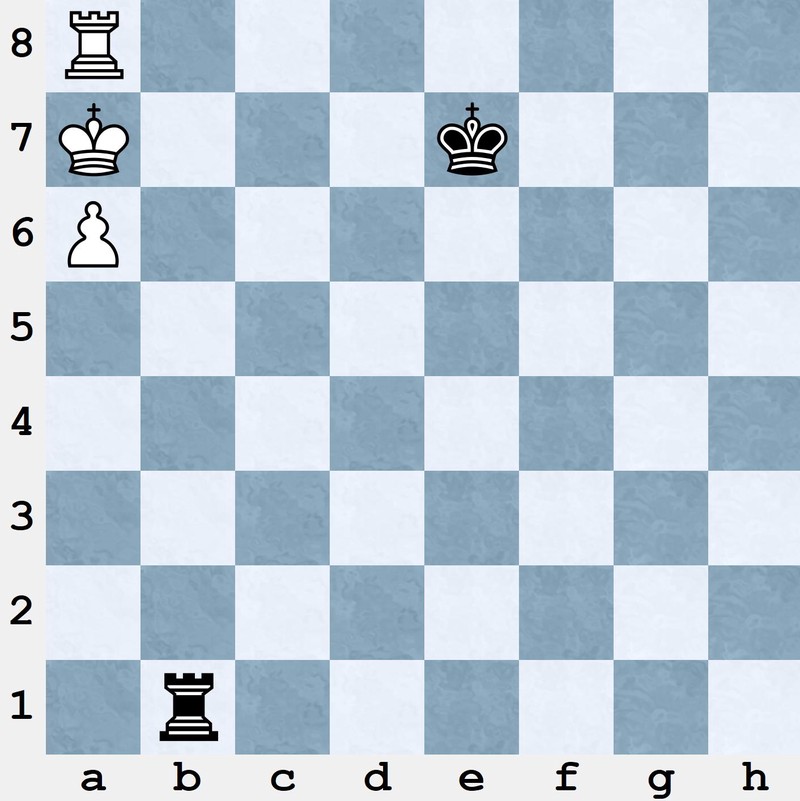
As you can see, white’s king is stuck on the a file and can not get out of his pawn’s way. Or can he? Let’s take a look at the winning method.
1.Rb8 Rc1
2.Kb7 Rb1+
3.Ka8 Rc1
4.a7 Kd6
5.Kb7 Rb1+
6.Kc8 Rc1+
7.Kd8 Rf1
8.Rb6+ Kc5
9.Ra6! Rf8+
10.Kd7 Kd5
11.a8-Q+ and wins
Next let’s take a look at the Tarrasch rule. It is a general principle that applies in the majority of chess middle games and end games. Siegbert Tarrasch (1862–1934) stated the "rule" that rooks should be placed behind passed pawns – either yours or your opponent's. The idea behind the guideline is (1) If a player's rook is behind his passed pawn, the rook protects it as it advances, and (2) If it is behind an opponent's passed pawn, the pawn cannot advance unless it is protected along its way.
Siegbert Tarrasch
The original quote, from page 57 of his book The Game of Chess (1938) is:
"In complicated Rook endings the most important rule is one laid down by the author: The Rook's place is behind the passed pawn; behind the enemy pawn in order to hold it up, behind one's own in order to support its advance."
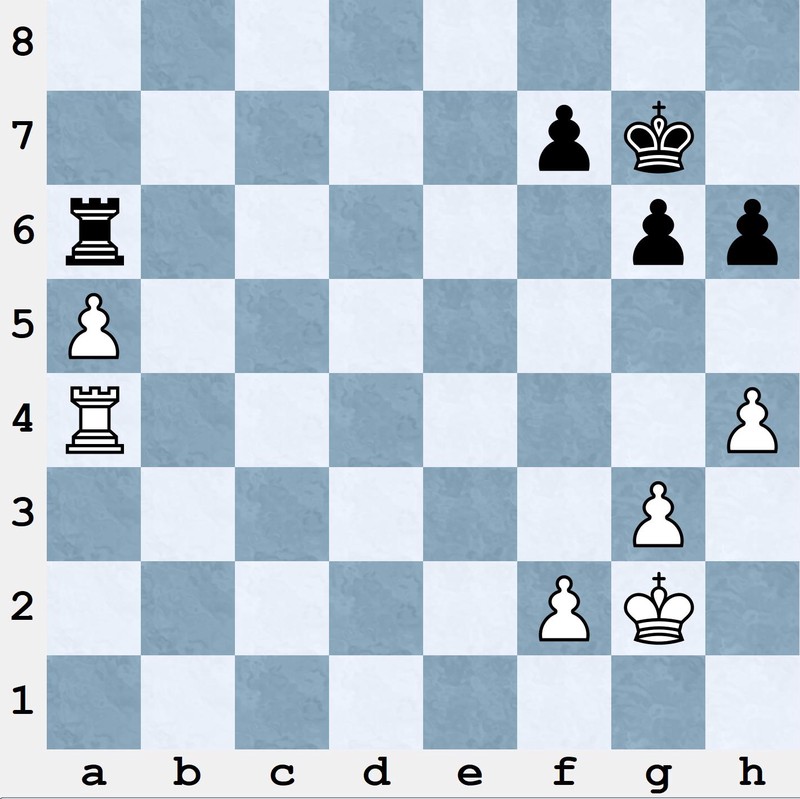
The best example is from an actual game from the 1927 World Championship match between Alexander Alekhine & Jose Capablanca. The diagram above is after white made his 54th move.
54. Ra4 Kf6
55. Kf3 Ke5
56. Ke3 h5
57. Kd3 Kd5
58. Kc3 Kc5
59. Ra2 Kb5
60. Rb2+ Kc5
61. Ra2 Kb5
62. Kd4 Rd6+
63. Ke5 Re6+
64. Kf4 Ka6
65. Kg5 Re5+
66. Kh6 Rf5
67. f4 Rc5
68. Ra3 Rc7
69. Kg7 Rd7
70. f5! gxf5
71. Kh6 f4
72. gxf4 Rd5
73. Kg7 Rf5
74. Ra4 Kb5
75. Re4! Ka6
76. Kh6 Rxa5
77. Re5 Ra1
78. Kxh5 Rg1
79. Rg5 Rh1
80. Rf5 Kb6
81. Rxf7 Kc6
82. Re7 Resigns
In closing let’s look at probably the most famous rook ending of all. The Lucena position. The following winning method is called “building the bridge”.
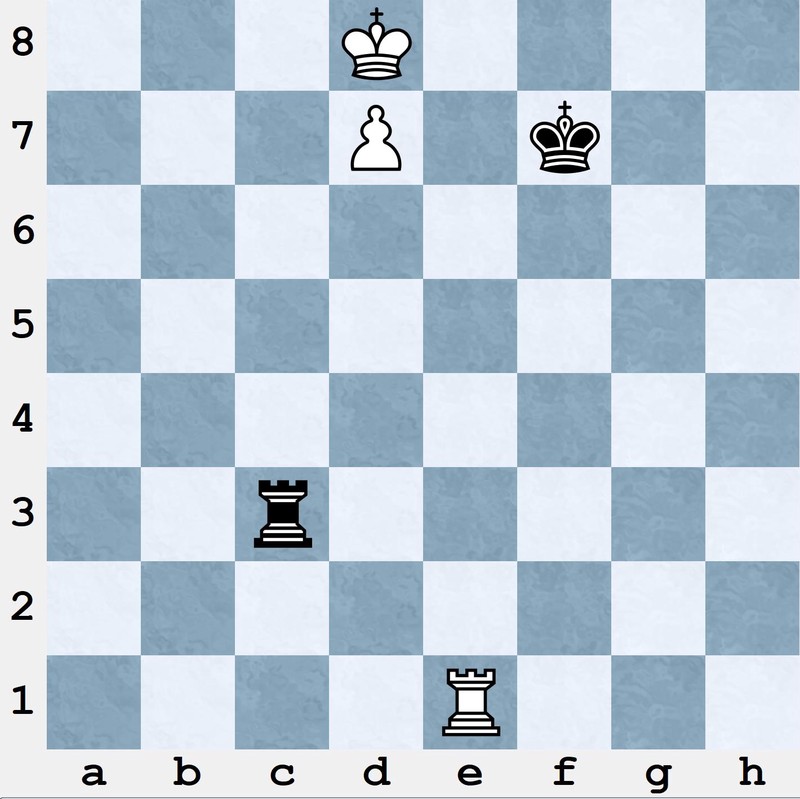
1.Rf1+ Kg6
Here black could try Ke6 but after Ke8 white queens next move
2.Rf4 Rc1
3.Ke7 Re1+
4.Kd6 Rd1+
5.Ke6 Re1+
6.Kd5 Rd1+
7.Rd4 and wins
The best place to practice your endings is ChessThinker.com
The best place to find a chess coach is ChessExercise.com
You may also like
 NM AngryWeasel
Gukesh uses King on the 6th technique
King on the 6th WFM fla2021
The Power of the Fixed Center
In this blog you will learn some tips of what you need to do in fixed center positions, take a look … NM AngryWeasel
Komodo Dragon 3 vrs Stockfish 16
Two chess engines evaluate a position NM AngryWeasel
10 Chess Strategies
A quick look at ten different strategies NM AngryWeasel
The time Fischer allowed opposite color bishops
Opposite Color Bishops GM Avetik_ChessMood