
Assembling Master Level Opening Repertoires
These are the openings that master level players are using in their blitz and rapid games
There are as many different opening repertoires as there are chess players. Among top players, it's hard to say some openings are objectively better than others — they're just different.
Every opening comes with different ideas, and players will gravitate toward ideas they like and try to find positions that they will be more comfortable in than their opponents.
No chess player can survive with a single opening. In professional leagues, players know who they're going to play against well in advance, giving them a long time to prepare against the specific play-style of their opponent. Top players thrive in these environments by employing a wide variety of openings to be as unpredictable as possible.
But online? Things are different.
Playing on Lichess, with blitz and rapid games, it's unlikely you ever play against the same person twice. With random matchups, you can stick to a few choice openings that you know well.
You'll get better and better at them game after game, and thanks to the endless supply of sparring partners, you never have to worry about your opponents prepping against you.
So I dug through the database of games here to see what master level players were choosing for their openings as white, and as black against e4 and d4. There are other ways to start the game, but since these are the most common, they're the ones I find most interesting.
NM Robert Ramirez – King's Indian Attack, Pirc Defence, King's Indian Defence
Robert Ramirez is a National Master and plays primarily fianchetto based openings.
The King's Indian Attack (KIA) and the King's Indian Defence (KID) aren't identical, but share a lot of common tactics. As white, the KIA gets an extra tempo which often leads to much more aggressive positions, locked centres, and heavy kingside attacks.
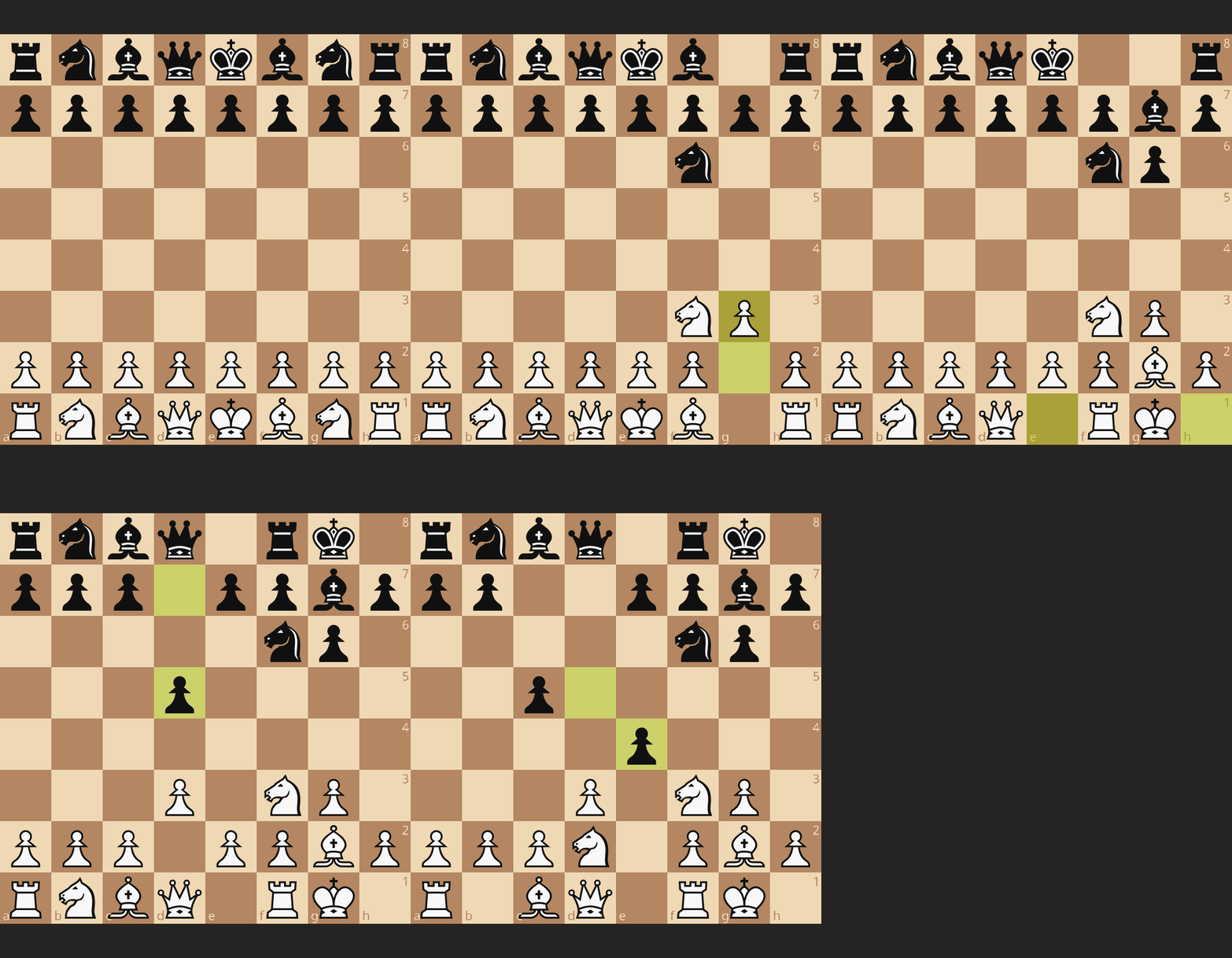
Against d4, he technically plays the Modern Defence but almost always transposes it into the KID. If white doesn't want to allow the King's Indian Defence, they have the Trompowsky attack with 1. d4 Nf6 2. Bg5 g6 3. Bxf6 exf6
This is still playable for black, but it's a different position with very different ideas, and transposing from the Modern to the KID avoids the situation entirely.
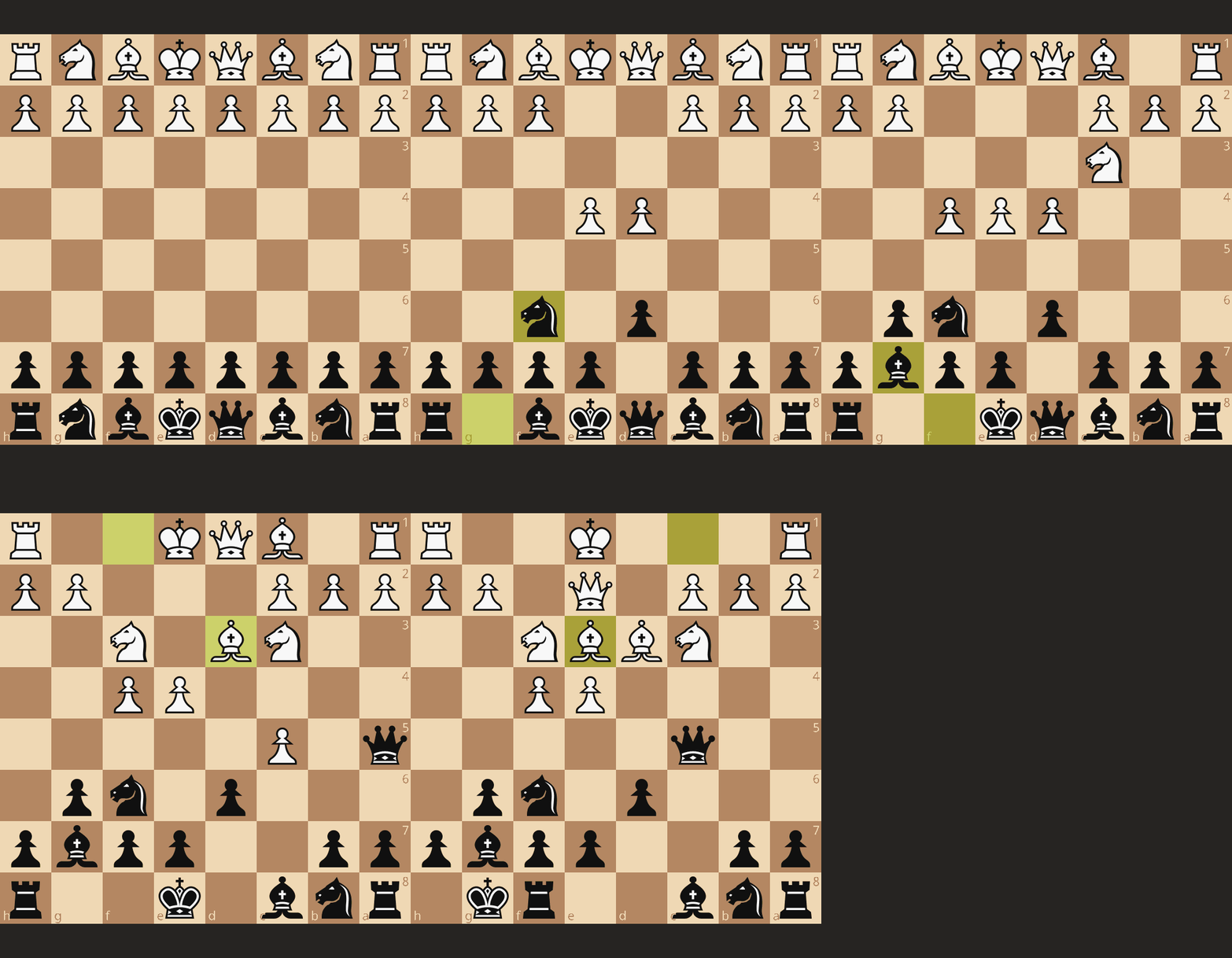
Against 1. e4 Robert plays ...d6 for the Pirc Defence. This is a hypermodern approach that allows white to take the center with a large sparse structure while black develops a densely packed structure around the edges.
All of these openings feature kingside fianchetto formations and can often transpose into each other, allowing Robert to remain in familiar territory no matter what his opponents play.
IM Eric Rosen – London System, Stafford Gambit, Indian Defence
The London System is a popular opening for white that can be played no matter what the opponent wants to do. White starts with d4, develops their bishop and knight, and then forms a triangular pawn structure.
It's an easy to learn opening with a lot of depth and room for exploration, which is why Eric Rosen, an International Master from the USA, is such a big fan of it.
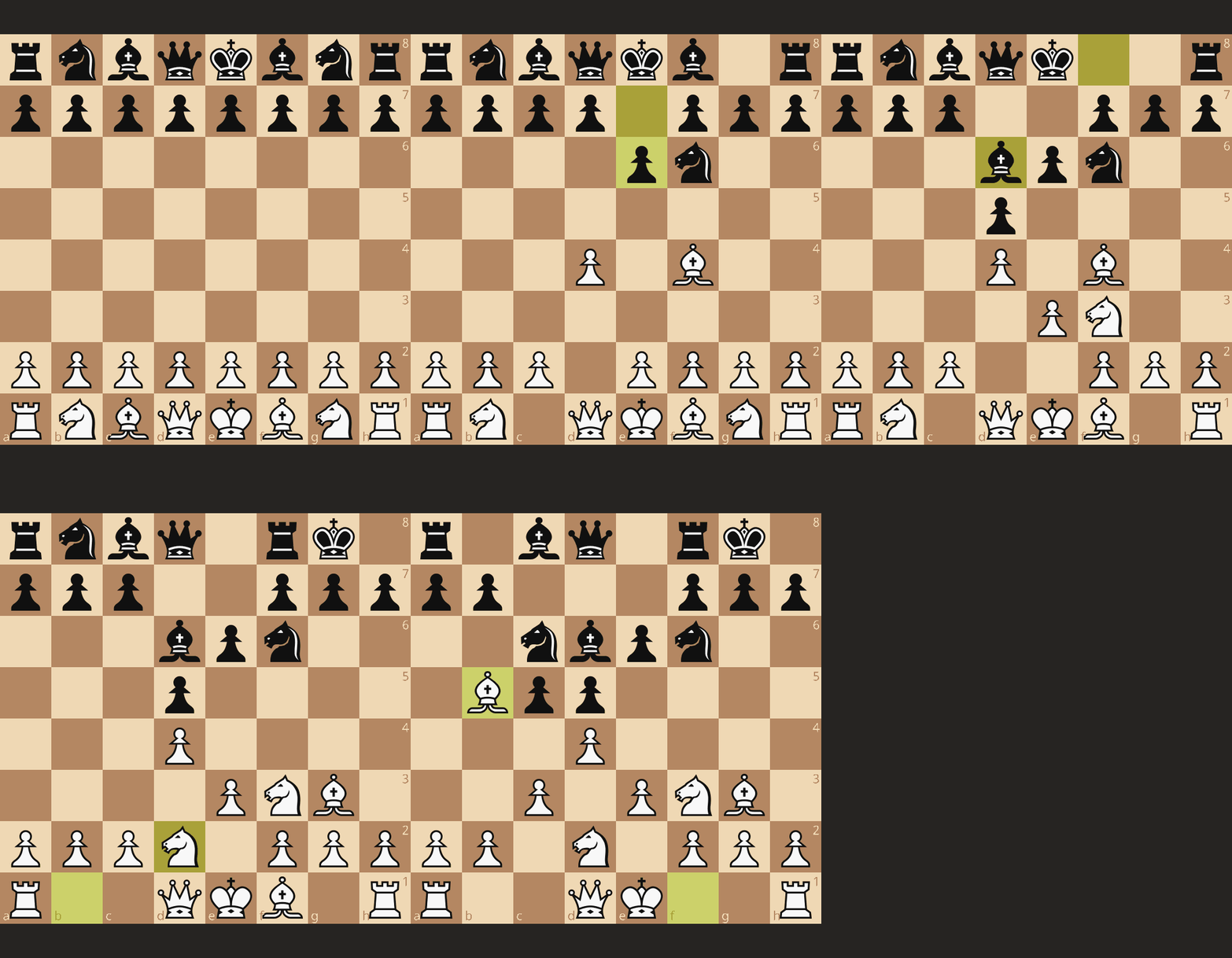
Eric's favourite opening as the black pieces is the controversial Stafford Gambit. This is a technically unsound opening where black gives up two pawns in exchange for rapid development and a fleet of incredibly dangerous attacks and checkmate threats.
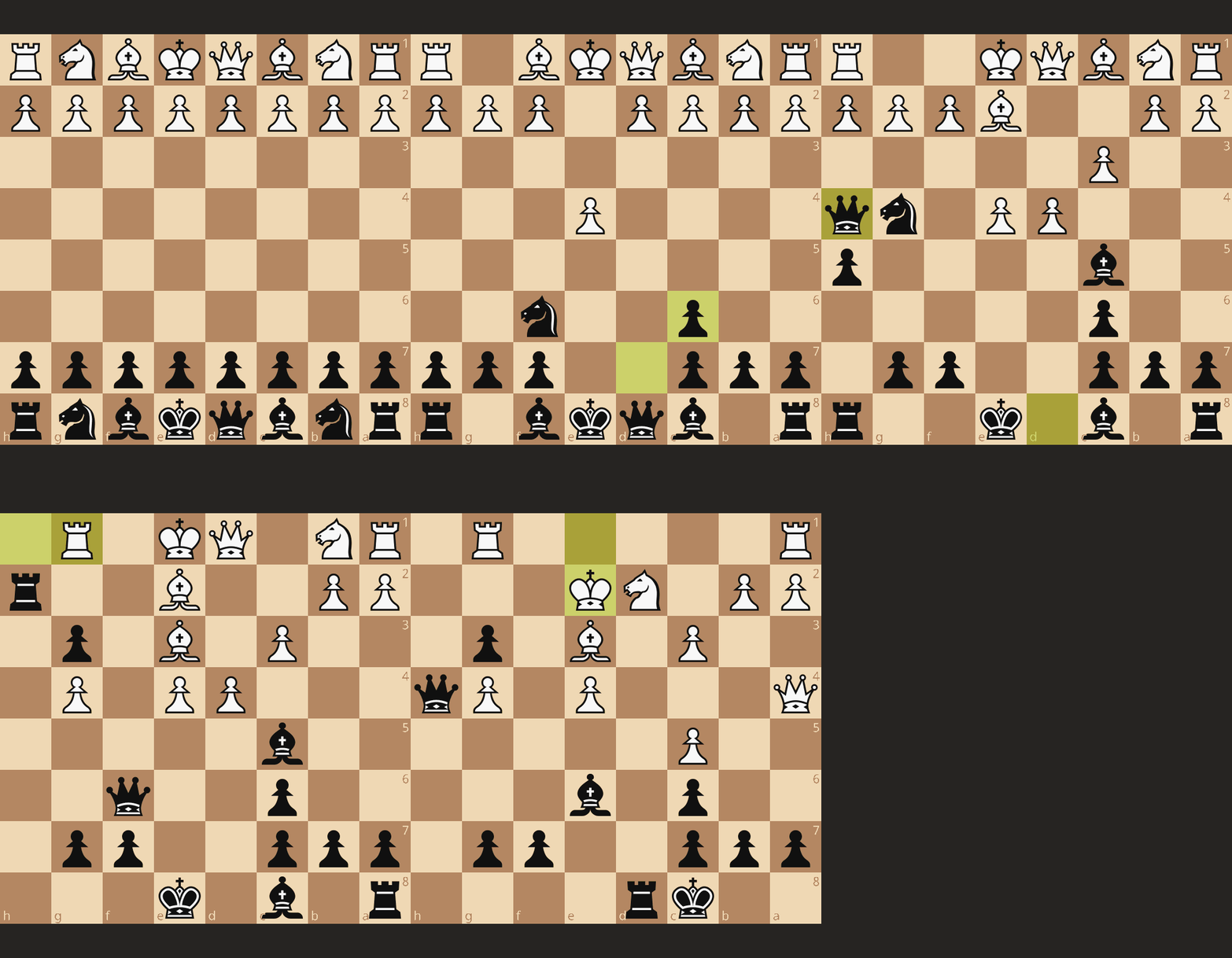
There are challenging refutations to the Stafford Gambit, and the positions that arise from those refutations are similar to the positions Eric gets in the Indian defence, which is his choice against d4.
This collection of openings allows Eric to re-use lines and theory across many of the positions he gets into.
WGM Alexandra Obolontseva (QGD Exchanged, Sicilian Dragon, King's Indian Defence)
Alexandra Obolontseva is a Russian Grandmaster who primarily plays the queen's gambit as white.
The Queen's Gambit Declined Exchange Variation trades off the center pawns to create two semi-open files (the Carlsbad Pawn Structure) with lots of popular ideas to progress from there.
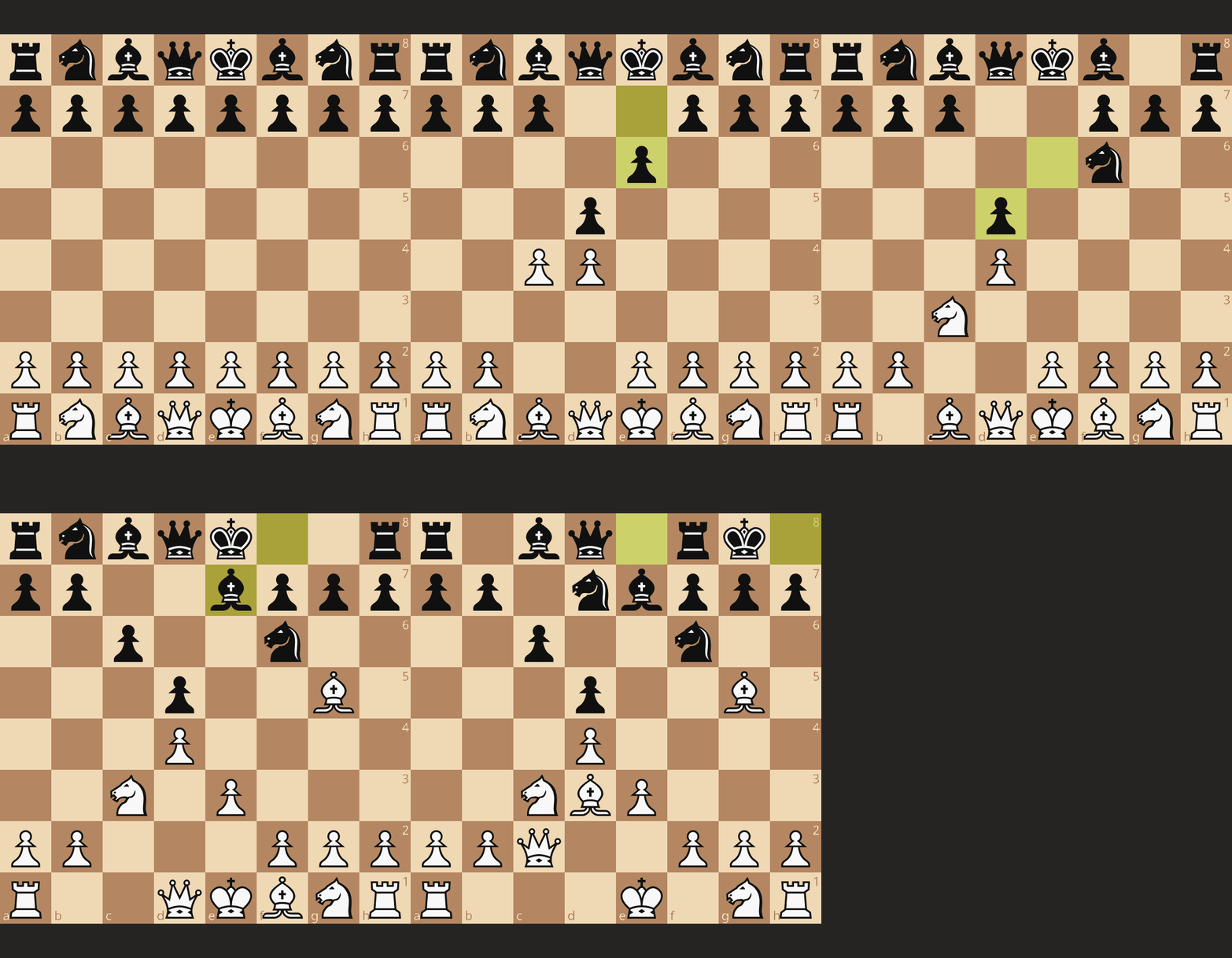
The King's Indian Defence (against 1. d4) and the Sicilian Dragon (against 1. e4) both feature kingside fianchettos but differ in the pawn structure. The KID strikes the center from the e file while the Sicilian Dragon strikes from the c file. Both have common variations that lead to either open or closed games.
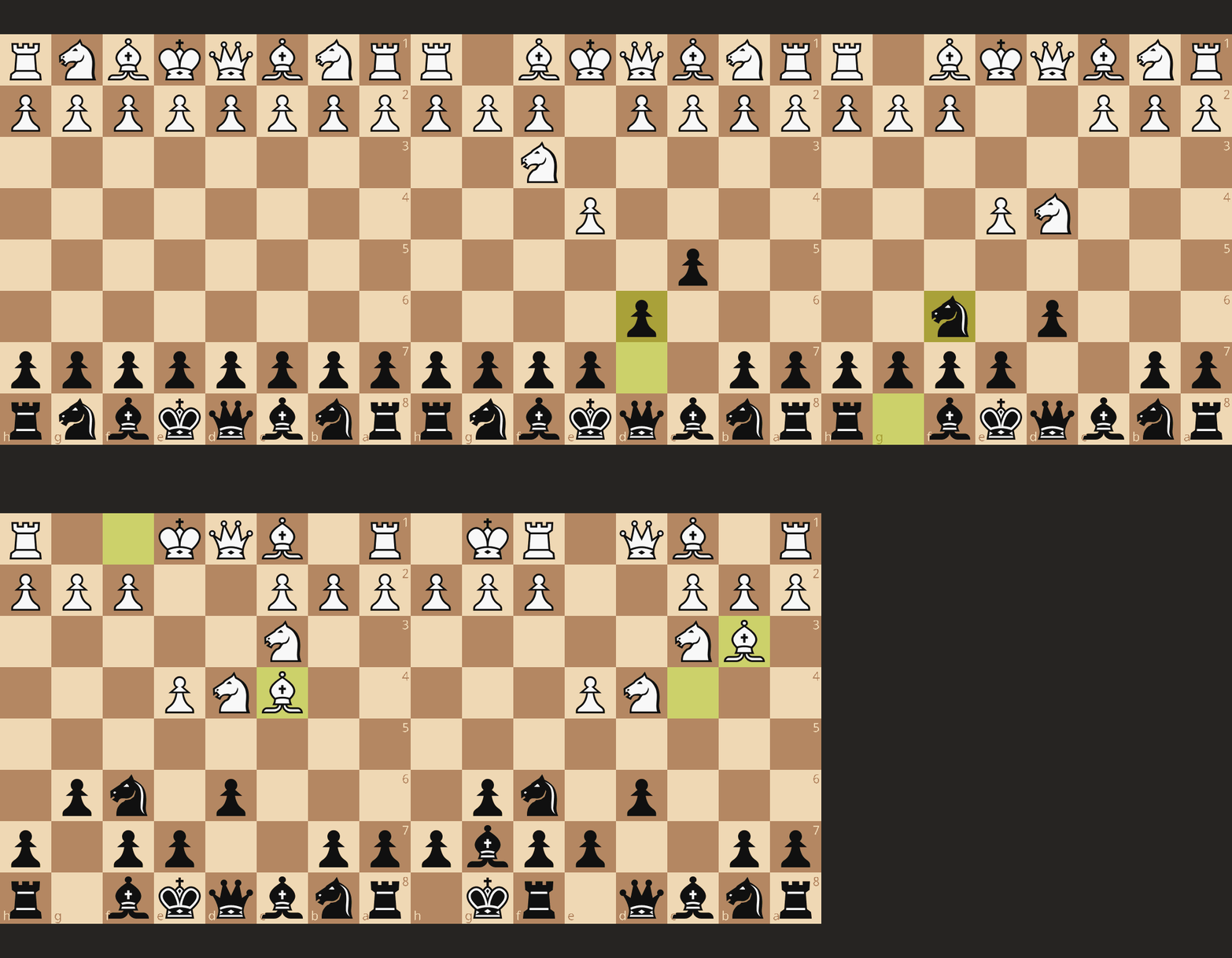
These openings all involve sharp pawn activity, with the outcome of each game largely decided by the player with the strongest understanding of pawn warfare.
GM Hikaru Nakamura (Vienna Game, Modern Defence)
Hikaru Nakamura is one of the strongest grandmasters in blitz games. His primary opening is quite unexpected from most players, which can take them off-book very early in the game.
The Vienna game starts with 1. e4 e5 2. Nc3 and is about 30 times less popular than the standard 2. Nc6
Despite that, it's an incredibly flexible opening with many attack and defence plans.
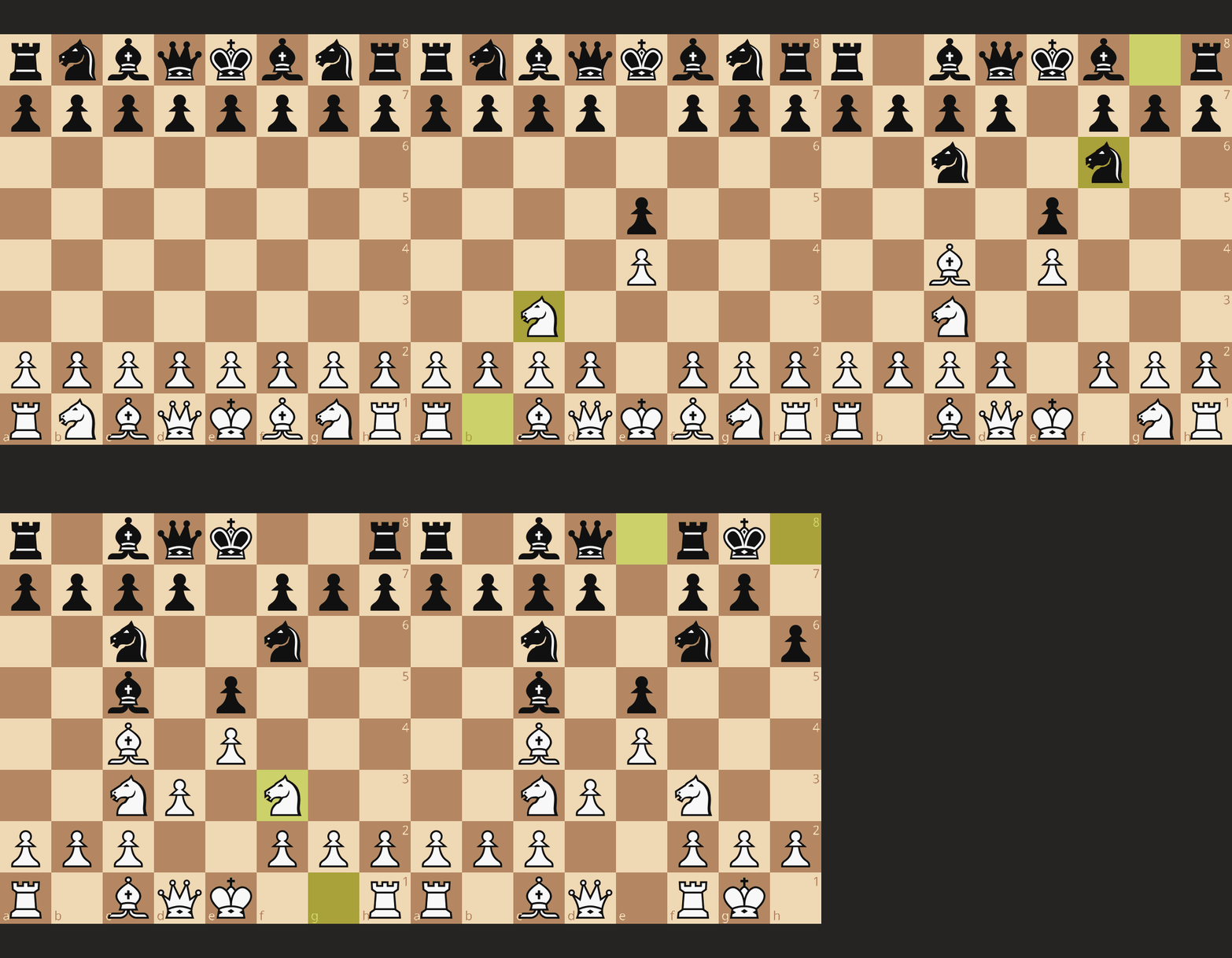
As black, Hikaru plays the Modern defence against both e4 and d4, lining up his fianchetto'd bishop straight through the center of the board. This sometimes transposes into the King's Indian Defence, but not as often as it does when Robert Ramirez plays.
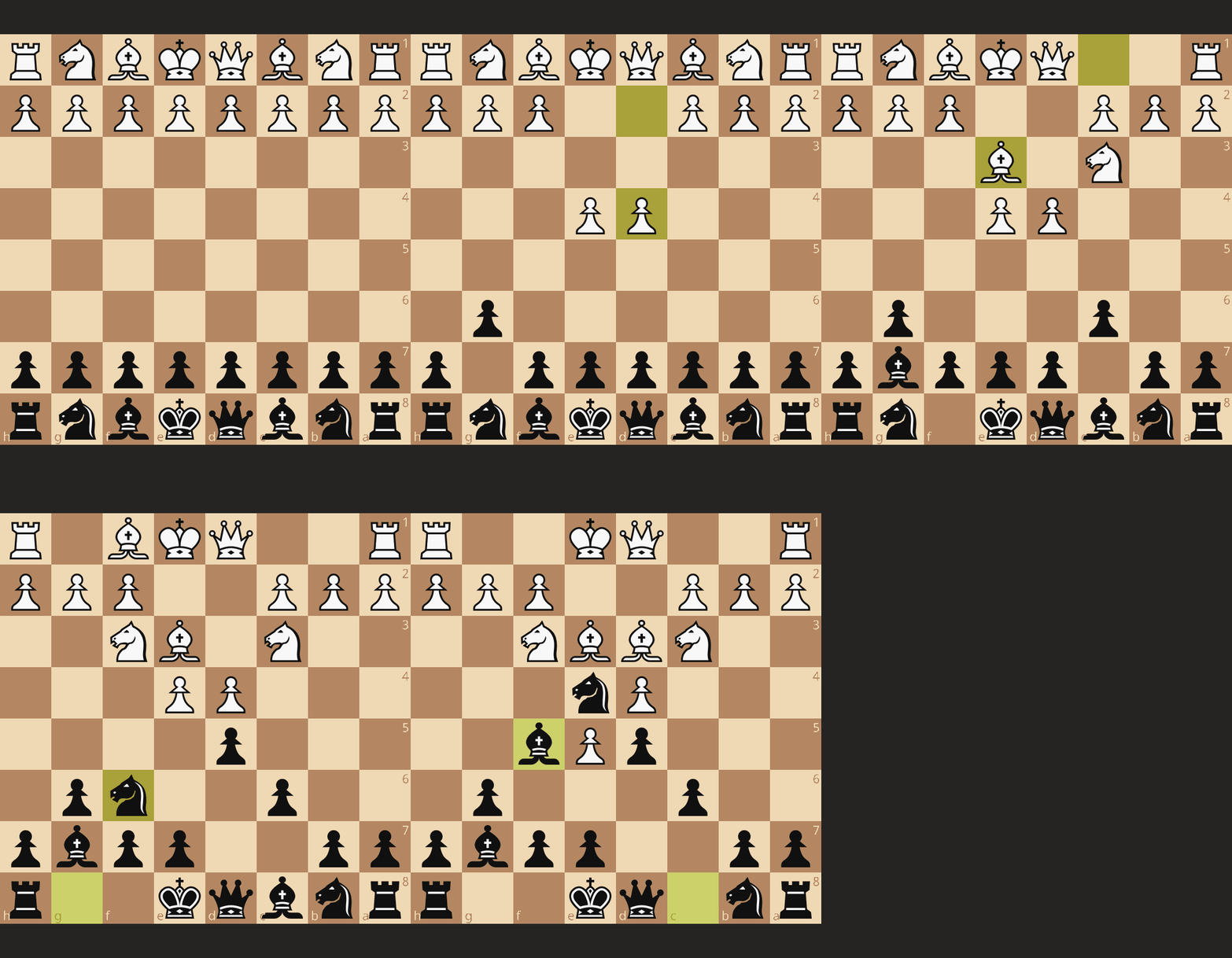
By playing an unconventional opening as white, and only using one opening as black, Hikaru stays in familiar territory, playing in his own comfort zone but outside of his opponents'
GM Magnus Carlsen (Ruy Lopez, Sicilian Najdorf, Queen's Gambit)
As one of the greatest chess players of all time, Magnus Carlsen is proficient in an incredibly wide variety of openings.
According to the Lichess DB, any move by Magnus, as white, leads him to at least a 2/3 win rate.
Magnus's most common openings are those with deep bodies of theory, complicated lines, and deadly traps. He stays on-book much longer than his opponents and outplays them off-book too.
As white, that's the Ruy Lopez (Spanish Game). Of all the open games, the Ruy Lopez has been the most deeply studied, with long branches of moves scrutinized down to move 30.
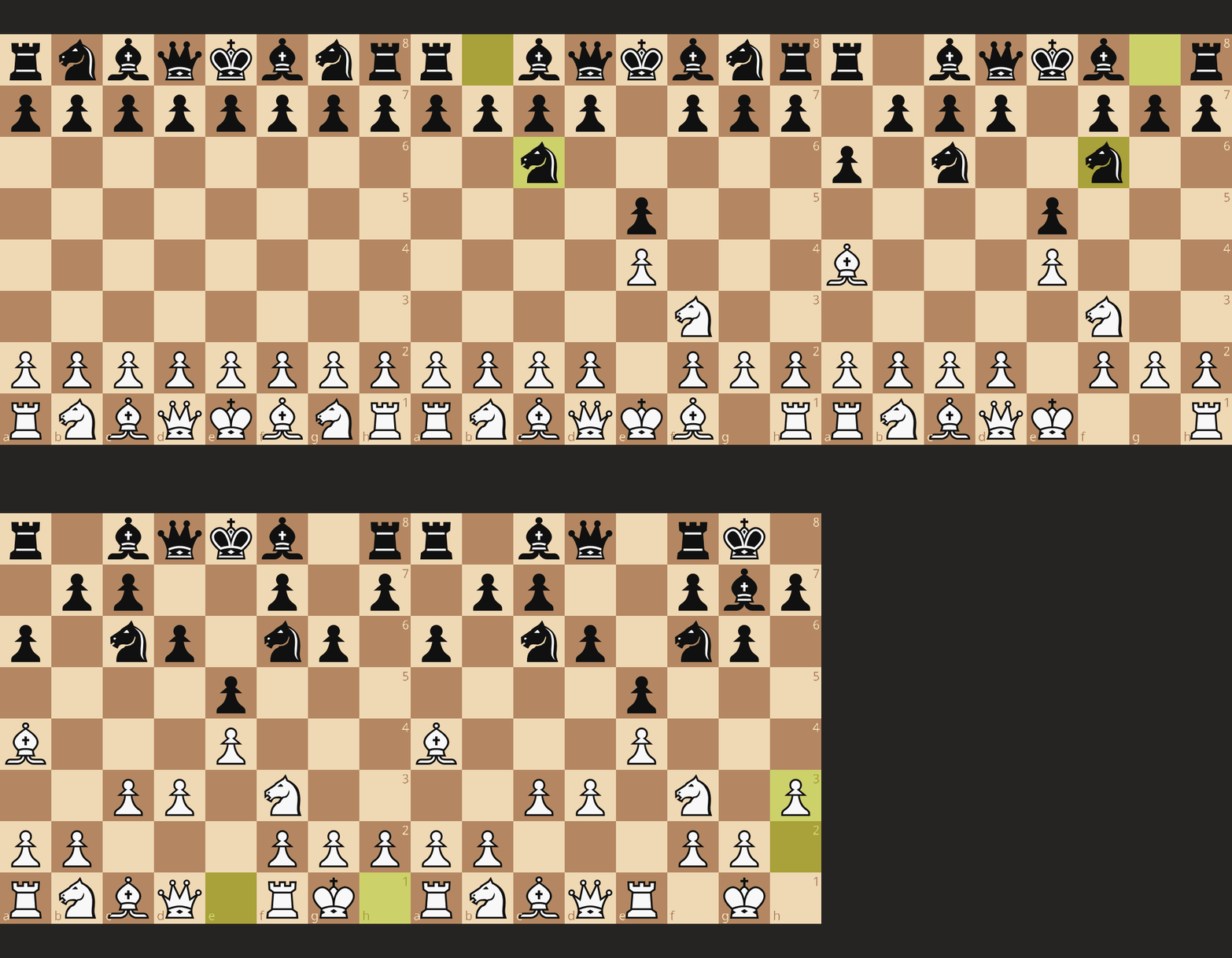
The Sicilian Najdorf is Magnus's choice against 1. d4 and for similar reasons.
As the game progresses past the 10th and 20th moves, the opponent has a variety of reasonable moves that are all playable, and it takes an incredibly strong player to understand all of these lines at such a deep level.
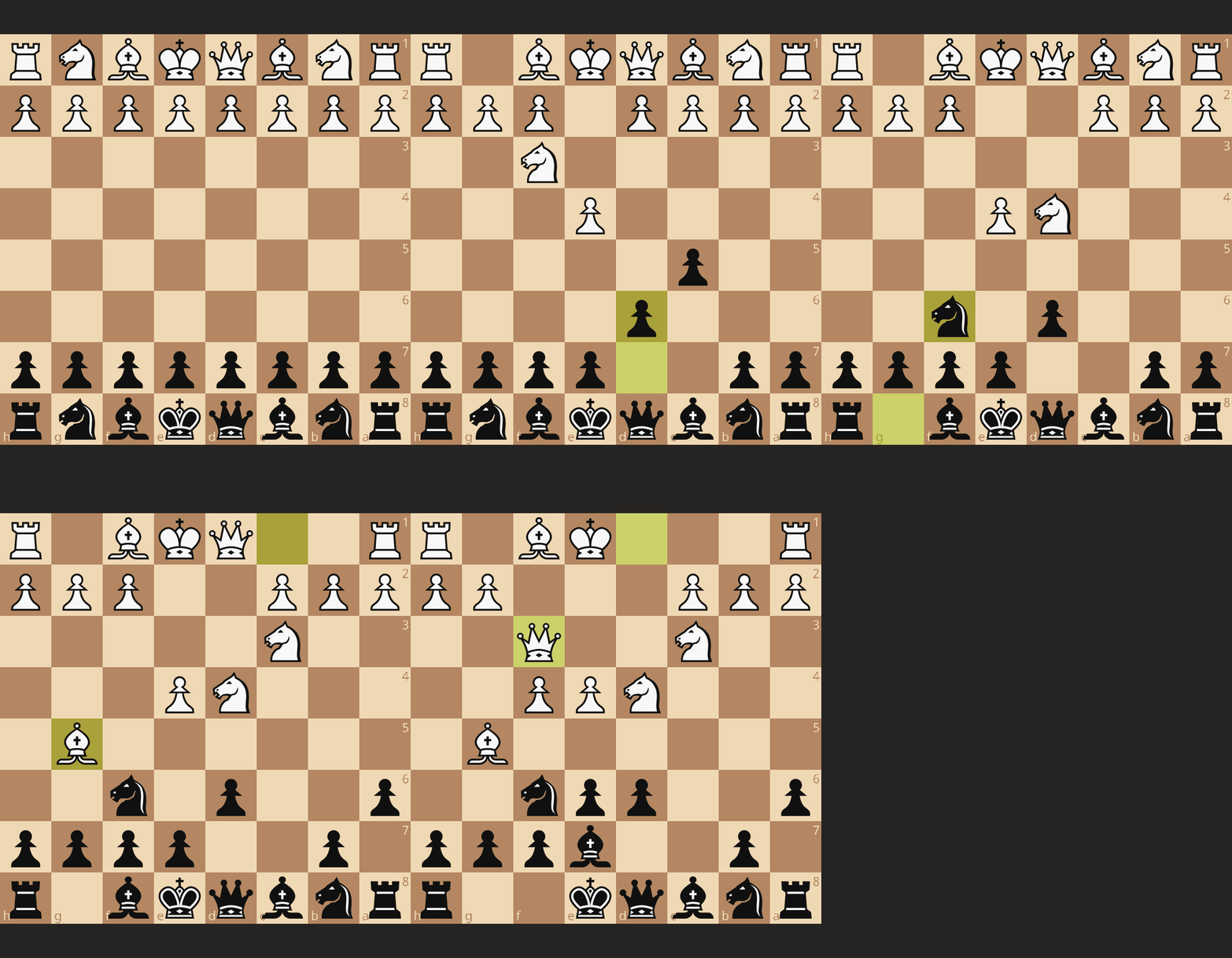
Against 1. e4, Magnus plays the Queen's Gambit Accepted. Accepting the queen's gambit leads to much sharper play than declining it, but that feeds into Magnus's strengths as one of the top players in the world
Conclusion
Understanding why another player chooses a particular combination of openings for their repertoire gives you a little window into their mind and thought process. Openings can be a deeply personal choice, but this should give you a few ideas for how to combine ideas you like into a repertoire that creates chess games you like to play.
Check out the Chesspresso blog for more chess guides and tips
