Hi! Today we will talk about Robert Fischer.
"I like the moment when I break a man's ego," - Robert Fischer.
Hello everyone again!
Today we continue the column of stories about the greatest chess players!
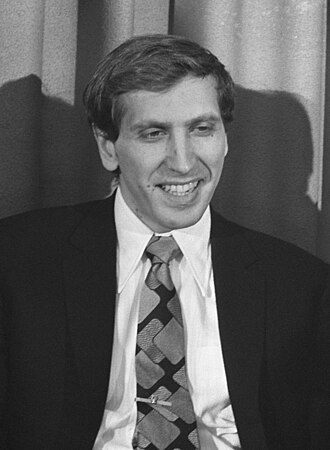
Robert James (Bobby) Fischer: American chess player, grandmaster and 11th World chess champion (1972-1975). He was born on March 9, 1943 in Chicago and died on January 17, 2008 in Reykjavik. Fischer became famous for his dominant victories in the US Chess Championships, winning all eight in which he participated. Early years and career: Fischer became a grandmaster in 1958 at the age of 15. He is known as one of the most dominant players in history, having won all eight U.S. chess championships he participated in by a wide margin. World Champion: In 1972, Fischer defeated Boris Spassky and became the 11th world chess champion. It became one of the most famous and intense matches in the history of chess, dubbed the "Match of the Century." Records: In 1971, in the challenger matches with Larsen and Taimanov, Fischer set a record by winning all 12 games against them. Retirement: Fischer played his last match in 1972 and relinquished the world title in 1975. After that, he practically stopped his chess career, although he remained one of the most influential figures in the chess world.
About Fischer\`s favourite debut.
Bobby Fischer called the Old Indian Defense his favorite opening, although he had other strong openings in his repertoire, such as the Sicilian Defense. He considered the Old Indian defense to be an excellent choice, allowing for an aggressive and controlled game. The Old Indian defense: Fischer used it as one of his strongest responses to 1. d4 to aggressively play the game. Sicilian defense: It was another important opening in his arsenal, especially the Scheveningen option, Sozin. Other openings: Fischer also played Caro-Kahn and other openings, but according to the statement, the Old Indian defense was his favorite.
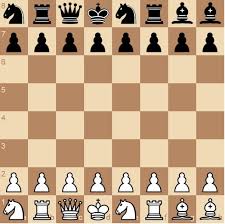
Fischer's Chess (or "chess-960") was invented by the eleventh world chess champion Bobby Fischer in 1996 to remove dependence on learned opening options. The main difference from classical chess is the random arrangement of the pieces on the first and last horizontal lines, which forces players to rely on ingenuity from the first moves, rather than on memorized moves. History of creation Idea: Bobby Fischer decided to create a new version of the game after his rematch with Boris Spassky in 1992. He wanted to save chess from the grueling home preparation and memorization of opening variations. Formalization: In 1996, Fischer presented to the world an updated version called "Fischer Random" at a press conference in Argentina. Distribution: In the Russian-speaking environment, the new format was called "Fischer chess" or "Fischer chess". Key Features Random initial placement: Pieces (except pawns) on the first and last horizontal lines are placed randomly. There are 960 possible positions, which gave the game its second name, Chess-960. Independent play from the first turn: Due to the random start, players have to rely on their talent and ingenuity from the very beginning of the game, rather than on memorized combinations. Modified castling rule: Due to the variety of starting positions, the castling rule differs slightly from the standard one. Depending on the position of the king and the rook, the castling may look different, but the basic conditions are met (free fields, the pieces did not move). Game development First tournaments: The first Fischer World Chess Championship was held in 2001 in Mainz (the winner is Peter Leko). Modernity: Since 2019, FIDE has started hosting 960 World Chess championships. In October 2022, Hikaru Nakamura became the Fischer World Chess Champion.