
is becoming a grand master easy
see how to become a grand masterWhat does it take to become a chess Grandmaster? What qualities you should possess? How should you invest in yourself? Find out in this article!
If you talk with kids who’ve started to play chess and you ask them what their goal is, 99% of the time their answer will be “to be a World Champion!” – right? ?
Well, do you know what happens when you ask most adults the same question?
“I want to become a chess Grandmaster!”
It’s cool to have dreams and it’s even cooler if your dreams are your goals.
However, it’s very important for you to be aware of the difficulty of your goal before starting. Otherwise, you’ll begin your journey, spend lots of time and effort, and in the end be left with nothing more than broken dreams.
It would be easy for me to write a motivational article telling you that anyone can become a Grandmaster, that it’s not hard, blah blah blah... But that’s not the reason why I write articles.
I write them for one purpose ONLY - to help you.
That’s why in this article, I’m going to open your eyes. I’m going to tell you all the things that others wouldn't dare to, and in the end, you’ll understand why the truth can be hard to find.
At the same time, I’m not trying to pour water on your inner flame or kill your enthusiasm – I’m just going to tell you the truth.
And if you know the truth and are still raring to go, I’ll be the first person to help you on your journey.
Unfortunately, about the topic, How easy or hard it is to become a chess Grandmaster", almost all the articles are written by people who have failed to become a Grandmaster or people who dream about it...
It's time for the truth about hard and at the same time how easy it is to achieve the GM.
But before that, let me clarify the official requirements to become a GM.
The Official Regulations to Become a Chess Grandmaster
The chess grandmaster title is awarded by FIDE, which is the governing body of chess competitions in the world. You must meet 2 of the following conditions -
- Have a FIDE rating of 2500 or more.
- Score 3 GM norms, where your rating performance should be 2600 or more.
To complete a Grandmaster norm, there are some other minor conditions that you need to fulfill too. At the same time, one can also become a GM by winning certain tournaments (like the World Junior Championship).
For more information, you can refer to this FIDE handbook and check all the rules and exceptions to achieve the Grandmaster title.
Now that we’ve covered the requirements, it’s time to dive into the meat of the matter.
Let’s go!
So, how hard is it to get the Grandmaster title?
Let me start by saying that there’s no other pursuit where the difficulty is either underestimated or overestimated by so much.
On one hand, I’ve seen people that play the game for 2 years and think that after 2 more years they will become a chess GM (seriously!), and on the other hand, there are people with a 2400 FIDE rating at the age of 15, not realizing how close they are to getting their Grandmaster title.
The big lie
Why do many people think that becoming a GM is easy?
There are 2 main reasons.
1. Because there are lots of articles that say it is!
Lots of people write articles saying that it’s easy to become a GM because it keeps their readers motivated. Wouldn’t you rather read an article that reassures you and tells what you want to believe and what you want to hear?
2. Many coaches want you to believe it because then you will pay them.
Unfortunately, over and over again I hear of coaches who tell their students they’ll make them a GM in one year. That feeling of excitement means that many students don’t mind paying whatever amount they ask for their services. But the problem is that the same coach says that to everyone... ?
There’s an even stranger phenomenon. There are people who are not even close to becoming a Grandmaster but create YouTube videos or write articles about how to become a Grandmaster. And not just how to become one, but how to do it FAST!
Now I am writing this and I understand how many will try to attack this article to defend themselves, to protect the lie.
But I felt I MUST tell you the truth. No matter what.
Becoming a Grandmaster is hard. It’s not a joke. But at the same time it’s absolutely achievable.
Why is it easy to believe?
The thing is many chess players start playing chess offline or online and from 0 rating they get to 1000 very fast. The next year they start reading some books or watching videos and get to 1500 rating.
Then they think something like this “Ok, if I raise 500 points each year, that means I need just 2 more years to get to 2500 level. Wow! Let’s go to Google and see what level 2500 FIDE-rating is. OMG, it’s Grandmaster!! Super! I’ll be a Grandmaster in 2 years!”
In this case, the FIDE rating math is tricky
The problem is that raising +1500 points and getting from 500 to 2000 level is easier than raising +200 points and getting from 2300 to 2500. The problem is the more you grow, the tougher it becomes to move forward.
The higher rating, the tougher it becomes to raise higher.
Look approximately what happens.
When you play against 0-1000 rating-level chess players, you mostly play against beginners or chess lovers who play for fun.
Getting from 0 to 1000 rating is quite simple. You may get there sometimes even without reading chess books or watching chess videos.
When you improve and play against 1000-1500 level players, they are not beginners anymore. Many of them have read books, some of them have coaches.
The competition becomes tougher. By simply playing more and more it’ll be possible, but not easy to beat this level.
1500-2000 level players have done something else rather than just play chess. On this level, more people have read books, watched videos, or have coaches.
To beat this level, you need to work seriously.
Playing just 1 hour a day will not be enough at all.
When you reach the 2000-2300 level, it becomes even tougher. Most of the chess players here have opening preparation, know chess concepts well, have experience.
Just 1 hour of work a day will not be enough to get from 2000 to 2300 level.
Now about getting from 2300 level to 2400.
How are you going to beat people who are either talented kids or people with experience? Most of them have or had coaches. Their openings are strong. They are prepared tactically and strategically. Most of them spend a few hours a day on chess.
If you ALSO spend a few hours a day on chess, it will be enough for staying on the 2300 level(FIDE Master level) but not for getting to 2400.
And when you get to 2400 level, you get an IM title, you start facing mostly professionals who spend most of their day on chess trying to get to GM or people who have been professionals and have big experience.
It becomes much tougher...
Now just working for 8 hours a day is not enough for getting to the GM level. You should have a good coach/coaches, have a good study plan, work productively. Also, you’ll need to have a strong character, be a fighter inside.
Just playing good chess will not be enough for getting to the GM level.
Just an example
Have you ever seen a Grandmaster’s opening files?
When you scroll, scroll and its end can’t be seen?
I’ll show you.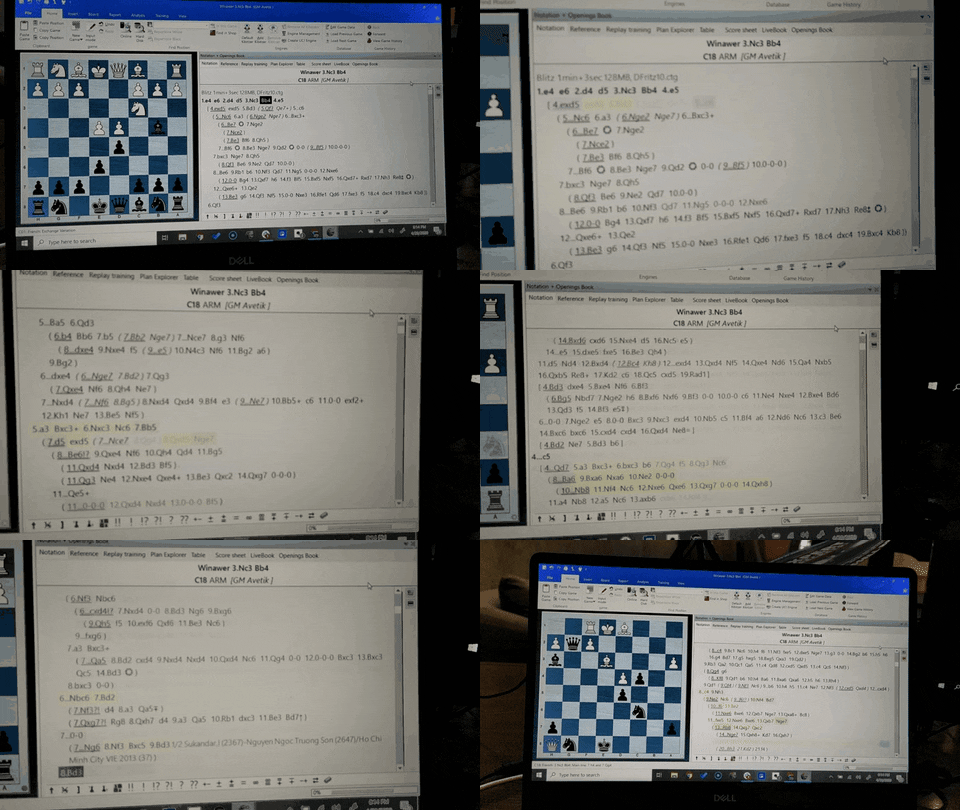
This is my analysis of JUST ONE variation: French Defense, Winawer variation. And on my computer I have a few hundreds of analysis like this.
(Don’t even think of stealing my computer ?)
Well, now you think: “Wow?! It’s a lot of work?!”
Nope! ? You don’t know how much that “a lot of work” actually is!
I haven’t been playing professional chess already for many years. I have switched to professional coaching.
Can you imagine what kind of analyses those Grandmasters have who play chess professionally?
Again. I am just trying to open your eyes to the fact that becoming a GM isn’t a joke. And if you think: “Ok, I’ll work very hard”, it’s not enough. They work as well ?
How are you going to beat them?
They are very well prepared, they are professionals.
When they play chess, they don’t resign easily, they don’t agree to draw easily in better positions. They have lots of knowledge in their heads and they are fighters.
Your competition becomes much tougher than when you were getting from 1800 to 2000 level.
Exceptions
Of course, there are some Grandmaster chess players who are exceptions. People who get to the 2000 level without knowing any openings, without having ever worked with coaches or watched any video courses.
People who have become Grandmasters just by playing 1.Nf3, 2.g3, 3.Bg2 like our GM Hovhannes Gabuzyan.
Or people who get to 2700 level without working too much on chess, like a super-strong GM Jobava Baadur. But do you know HOW talented these guys are?!
If you have never played against them or have never seen how they analyze a chess game, you can’t imagine.
If you think you are not less talented than them... Well, I advise you to find sponsors and coaches, to work 8 hours a day and be one of the best chess players in the world.
The challenges on the road to the chess Grandmaster title
On the path to becoming a GM, you are going to face certain obstacles.
Investment Issue
Another problem is the budget. You might get to the IM level by just working on your own.
There is less than 1% chance, but it’s still possible.
But to become a GM without a chess coach — no way. You will need someone who will work on your games, fix your mistakes, and work on your weaknesses.
When I was an IM at 18, I decided to become a Grandmaster in just one year.
Not only to play at GM level but to get all 3 norms and pass the 2500 FIDE Elo (a requirement for getting the GM title).
Can you guess what I did first? No, I didn’t start my next chess book.
I started looking for a coach. But not just a coach. For the one who will believe in me. Believe that I can do it in just 1 year.
Eventually, I met my future coach, GM Artur Chibukhchyan, who believed in my dream. Without his help, there was a 0% chance I would've achieved the Grandmaster title in 1 year.
And there was little chance that I would be a Grandmaster ever.
The problems
The thing is that hiring a good chess coach is an expensive pleasure.
It costs 100$/h on average. Another problem is that you should participate in different international chess tournaments. Which isn’t also cheap... (traveling and accommodation expenses, participation fees, etc...)
If the budget isn’t a problem for you, that’s very cool.
But for many chess Grandmaster title dreamers, it’s a problem. And there is an even a bigger problem - they don’t realize that it’s totally impossible without investing in themselves.
I don’t know any GM who has got there without spending thousands of dollars or without having good sponsors.
Strong Character
To become a Grandmaster you should have a very strong character. Just being a strong chess player is not enough.
During your chess career, you will get hard punches in your face that you can’t even imagine.
You will have painful defeats... You’ll have horrible tournaments when the first thing you would love to do will be to stop playing chess and give up on your dream.
Almost all the GMs have faced such situations during their chess career. The difference is - they didn’t quit...
Myself I had a few super painful cases when I couldn’t even touch my chessboard for months. But then I came back. And if you speak with other Grandmasters, you will see that almost everyone had similar stories.
And many players, more talented than us, have quit. Because they couldn’t handle that hard punch...
4 qualities that'll help you become a Grandmaster
To sum up, for becoming a GM you need to have these 4 qualities:
1. Be talented
2. Work very hard
3. Have a strong character
4. Invest in yourself smartly.
If you are less talented, then you need to push on the other qualities harder. If you don’t have a big budget, then you need to outwork others.
That’s it.
A few numbers
Researchers have found that there are around 700 million people playing chess.
Let’s say it’s wrong. And there are just 50 million. For becoming a Grandmaster, as already mentioned, you need to make 3 norms and pass the 2500 FIDE rating. If you pass 2500 rating you’ll be in the top 1000 players.
In the best 0.002 % ...
Can you imagine how small number 0.002 is?!
Now about the positive ?
If after reading all this you still believe in your goal, you still believe that you can become a Grandmaster and nothing will stop you, I am shaking your hand.
There is a big chance that you’ll make it.
If I could, you can too
Seriously ?
When I say that I was not very talented in chess, many laugh and think that I’m joking. Or they say “How could you become a 2600+ FIDE-rated Grandmaster without talent?”.
But it’s the truth.
My friends, with whom I’ve worked on chess, can prove how bad my memory is.
When we analyzed some variations together, very often the next day I could remember no more than 10% of that.
Before the game, when I needed to revise my analysis, it took me 3x more time, than from the others...
I’ll tell you one funny thing. But promise me not to laugh hard?
During one period of my chess career I was solving lots of compositions.
Then I was saving the best ones in a special file. Not because I knew that after some period I would become a coach and I would need it, but because my memory was so bad that after some months I would solve them again. Because all of them seemed to me to be new ones. And it felt like I’d never seen or solved them before.
I was not good at blitzing. My mind was not as fast as my friends who also became Grandmasters. So how did I become one?
I just outworked everyone.
My family, coaches, and my friends know how much I dedicated to chess and my dream. Often full weeks without day-offs, 8 hours a day.
But I had no other choice.
As we have already spoken, if you miss one of the 4 important qualities, you need to outperform the other ones.
It’ll be easier for you
So, I eventually became a Grandmaster and then passed 2600 as well. Many of you, who are reading this now, maybe much more talented than me...
And if you work as much as I did, then even 2700 Grandmaster is achievable.
Yeah, and probably I was investing in myself smartly (despite my Mercedez story ? )
I was not buying all the books, but the ones I needed.
I was not hiring the best coaches. I couldn’t afford it. I was hiring the best ones based on my budget.
I always try to be humble. But now let me skip it and tell you, that probably I would have become a Grandmaster even earlier if that time there were educational platforms, like ours - ChessMood or quality video courses recorded by Grandmasters.
So, you even have an advantage! Lucky you?
I am not very young. Can I still become a GM?
Well, here I have good news too.
There is a stereotype that if you haven’t started playing chess early, you can no longer become a GM That’s only partially true.
If you are 30 years old and have a 2000 rating, for you it will be much tougher to become a Grandmaster than for an 8-year-old who plays at the same level.
The only big difference here is that you are not a kid, you probably have a job and need to take care of your family. Maybe you are also married and have kids? Then you’ll have less time to invest in chess.
But if you are free and can invest your time in chess without limits, then an 8-year-old kid has no competitive advantage.
You just need one thing - the most important one!
The most important thing
Ask yourself a question: Why do you want to become a Grandmaster? Try to find a strong answer. If your answer is strong enough, nothing can stop you...
Last notes
Once again... The purpose of this article was not to pour water on your flame, or your dreams. It was just to open your eyes. To help you become aware of upcoming difficulties. And at the same time, I am the first person who will encourage you to believe in your dreams, fight for them, chase them and not give up.
And I’ll be the first person who will give his hand if after reading all this you still want to become a Grandmaster.
Being brave when you lack proper information is stupidity.
Being brave while also informed is heroism.
For the heroes whom this article will not stop from chasing their dreams and becoming a GM...
And for all the bright people in my life who helped me to get there...
Thank you!
P.S (other grandmaster themed notes) Recently, I am getting questions like "How you do that?", "How you work with your students?", "What's the secret", as two of my students became Grandmasters and all the students together raised around 1000 points in a few months.
Well, I work with my students not only over the chessboard but also I work on their psychology, subconscious mind and much more. That is not a few hour-work or a few day-work.
Here, in this article, I'll share with you one of the most important tricks! I call it legal doping.
In many sports, there are lots of ways to improve scores such as doping drugs, but, we know, that they are illegal and are controlled by special committees. However, there is a legal way to show the best result: doping with the mind.
While watching the Olympic games, you may have noticed some situations when, before the race, athletes are not chilling. They close their eyes, concentrate, and do some quick meditations. The aim is to bring their minds to a strong connection with their bodies. The same you can do in chess.
Once I did an experiment with my students. When they entered the classroom, I gave them a brain game. They failed to solve it. After a short break, we did some exercise for concentration and they tried again. This time they solved it very fast!
After that day, every time before thetraining started, they did some exercises. It helped them to clear their minds and to concentrate.
Can you imagine how amazing results you can get if you concentrate and clear your mind before the game?
We know that computers work slowly when there are lots of programs running. If we want them to work faster, we close all the unnecessary programs. The same happens with our minds. It works slowly when it's full of lots of sh*t.
Many of you have an experience of working with chess engines and you have probably met the situation when KNS (speed) is e.g. 5000. You close all the running programs and its speed jumps to 7000!
The same you can do with your mind and get in the Right Mood before the game.
Here are some tips and thoughts:
Before starting the game, whether it is online or offline, clear your mind. Throw away all your worries, whether they are related to your family, relationship or friends. Just concentrate on your game and you will be shocked how well you can play.
You will discover your inner potential. You will see that you are able to hit 2500 ELO offline, though you used to think that 2400 was your maximum.
Yeah, it's hard to get in that Right Mood, but with regular practice, strong effort, and burning desire, you can achieve it.
I assure you, with the Right Mood you can increase your strength by 100 ELO minimum.
If you get in the Right Mood just by 50% you will increase your ELO by 50. It's a lot!
Even if you get in the Right Mood by 10%, it's still good.
Right Mood is just like doping! When you use it and get in that state, you show much better results.
The most amazing thing here is that this doping is legal.
It's always with you, always. You can't forget it in the car. You can use it before and during the game as much as you want.
For illustrating all this better, I'll bring an example.
There are many Grandmasters, whose ELO is 2600, but when you analyze with them, you feel their strength is 2500. So, how do they perform that 2600? Yeeeah! With Right Mood!
On the contrary, there are many Grandmasters with 2600 ELO, who have the strength of 2700 during the analyzing. Why? Because during the game they fail to get in that Right Mood.
I'm sure you have seen a Grandmaster playing a horrible game and losing against an amateur player or someone, who crushed a Grandmaster and played the best game of his life. How? Right Mood!
Now you know the big secret! Try it and you will be surprised by the results you produce.
Cheers guys! Looking forward to hearing your amazing stories and seeing your brilliant games after getting in the Right Mood. (here's some more tips) Discover this simple tip that'll help you save many points.
Dear chess lovers, in this article I want to share one super-practical tip with you. It’s quite simple but it’ll save you many-many points.
Here it is:
Don’t resign during your move.
I’ll give you a fresh example that happened to one of my students.
Last month, Greg, during a blitz game managed to find one of the worst moves in the position below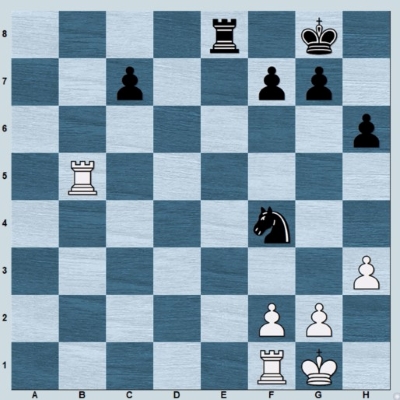
He played here 1.Rc1??
Black could give a check on e2 and take his Rook.
And then my student made the 2nd worst possible move.
After playing Rc1, he resigned without waiting for the opponent’s move.
I asked him: “Why did you resign?” He said: “Because my opponent would give a check and take my Rook”.
Then I asked him another question: “Why do you think that your opponent is smarter than you? If you played Rc1 and blundered the Ne2 check, why do you think he’ll see it?!”
Greg started to laugh :)
Guys, even if 99 times of 100, your opponent sees your blunder, there is still a chance that they may miss it.
And in the long run, you will save lots of points, especially in blitz!
You can resign anytime. It's never too late to do it.
Three lost points
Within the last 10 days, Greg, who played Rc1, saved 3(!!) games, where instead of resigning, he waited for the opponent’s move. Well, everything happened during blitz games, but anyway.
With his permission, I’ll show them to you
Game 1
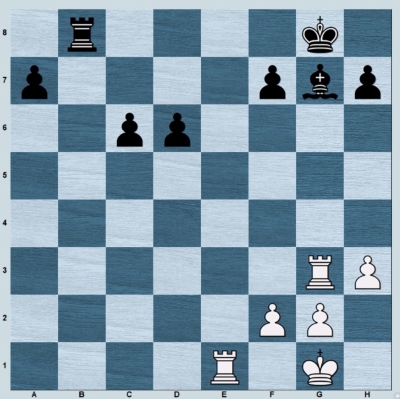
In this position, he played Ra1!? taking the opportunity that the Bishop on g7 is pinned.
The opponent played Rb7 and here he played Rga3?? forgetting that the Rook on g3 was pinning the Bishop and now the opponent can take the Rook on a1. After that, he'd have a totally lost Rook endgame without 2 pawns.
What did he do? Well, this time he didn’t resign. He waited for the opponent’s move, who, having a rating of 2600, didn’t see the blunder either and played Kf8
Game 2
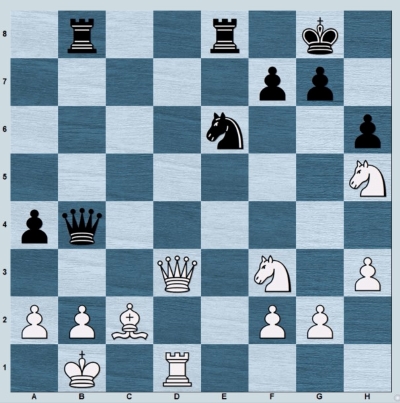
In this position Greg had two pieces and a pawn against the Rook, playing against another 2600-rated opponent.
Here he played 1. Qh7+ Kf8 and now he somehow forgot that the opponent’s Knight on e6 was defending the g7 and played Qg7
What did the opponent do? He played Ke7
A 2600-rated player!
If you didn’t see it, why should your opponent?
The next one, he plays with Black.
Game 3
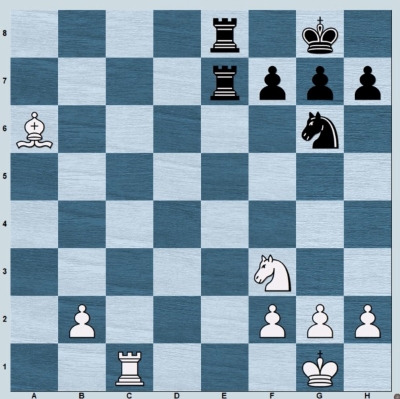
Here, with an exchange up, he played 1...Nh4, trying to use White’s backrank weakness and exchange the Knights. But he forgot that at the end of the variation, White will have Bf1! The opponent didn’t see it and played Nd2 ?
In all of these 3 games, Greg could have resigned after seeing his own blunder.
But he didn’t and saved 3 points!
Why do you think your opponent is smarter than you? Why should he have better concentration than you? Why should he notice something that you didn’t?
Do you know when you can resign? When you blundered, your opponent saw the move and it was such a horrible blunder that now even chess Gods can’t help you.
In this case okay, you can resign
Bluffing
This example is from my game. I was playing on chess.com against a 2900+ rated opponent.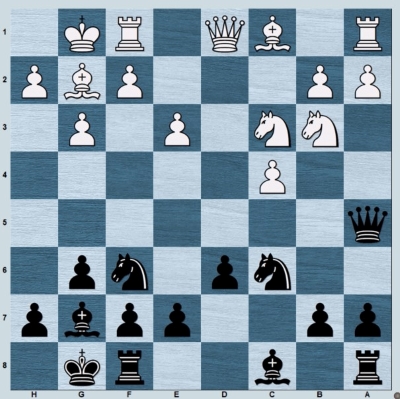
With his last move Nd4-b3, he attacked my Queen.
Now instead of playing 1...Qb4, my mouse slipped and I played Qa4?
Ah... He has a Knight on c3.
Of course, I would resign if he captured my Queen, but I waited...
And indeed... After thinking for a few seconds he pushed c5!
Now, of course, being a former poker player, I couldn’t stop myself from bluffing and took on c5!
My Queen still hung on a4, but he didn’t see it like on the previous move and took on c5. I played Qc4 and the game continued...
Why didn’t he notice that my Queen on a4 was hanging? Probably there is also a psychological factor here. People love to trust their opponents. If he played against someone rated 800 instead of 2800, he would definitely see Na4
The next example is the funniest.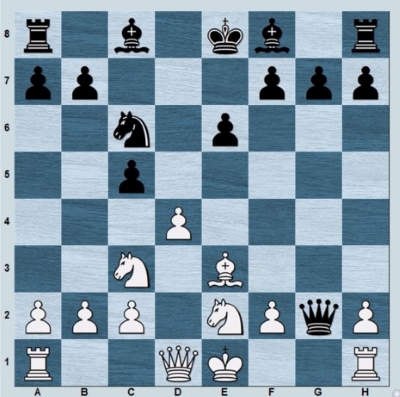
My student Thanadon, the champion of Thailand, was playing with White. It was a 3+0 online game.
With the last move the opponent took the pawn on g2 with his queen on d5.
Thanadon was probably expecting Qd8 or maybe Qd6 move from the opponent...
And he played Nb5
Now the opponent could take on h1 getting a Rook up. But can you guess what happened?
The opponent took on h2
After Rh2 Black resigned and the comedy was over.
Black was expecting to see Rg1 move. Who could expect that White would play Nb5?
And who could think that Black could take on h2?
The game was played between two 2500-rated players.
White won the game because after Nb5 he didn’t hurry to resign but waited for the opponent’s move.
We are all human
No one is immune from making horrible mistakes. We’re all human and strange things can happen to our minds. We can get super tired or fully lose concentration.
Even Grandmasters make incredible mistakes.
There are thousands of examples. I’ll show you just two.
Example 1:
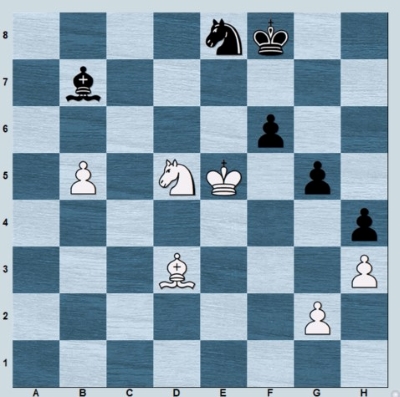
With White is playing super-strong Grandmaster Nigel Short against Alexander Beliavsky.
Something happened here to Short and he played 1.Ke6?? getting Bc8 checkmate...
Example 2:
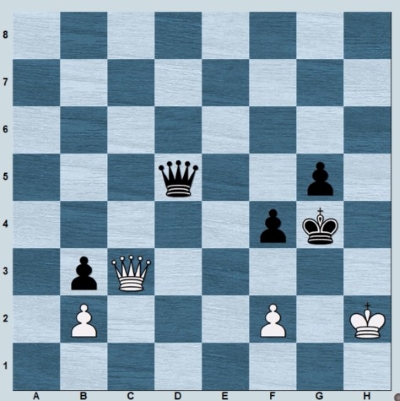
In this position, with Black pieces, Rafael Vaganian didn’t notice White’s threat and played 1...Qd1 getting Qh3 checkmate.
Both Nigel Short and Rafael Vaganian were among the best players of their time. Both games were played in classical games. And there are lots of other examples like this.
Just remember, we are all human, and strange things can happen even to the best players’ minds.
You can resign anytime. Don’t hurry.
And especially don’t do it on your move, when you blundered something.
Wait for the opponent’s move. He may miss it too.
My friends, hopefully, you’ll save many points with this tip, laughing and remembering this article.
P.S. Don’t forget to share it with your friends who have a habit of resigning as soon as possible. (here's more tips but soon I'll have nothing else to put on here) 99.9% of players choose the wrong approach and fail when it comes to learning and improving chess tactics. Discover what the 0.1% do differently.
Improving your chess tactics is one of the fastest ways to raise your rating.
Many chess lovers understand this, but unfortunately, most of them fail.
Often, they spend hours solving tactics on online platforms, but there’s little to no improvement in their tactical ability.
And at the same time, there are people like Lily.
Being our editor and a big chess fan (yet she plays little because her boss keeps her busy), she had 1,200 on chess.com when she started editing our Tactics course.
And in just 2 weeks, she raised her rating 100 points! Just by editing it!
Imagine how much you can raise your rating if you study tactics carefully and most importantly CORRECTLY!
So what’s the difference between those who grow their rating fast and those who don’t?
Why often it's not your fault and how chess books, courses, software, and training platforms can take you in the wrong direction?
What should you do to get better at tactics?
What’s the most effective method to study tactics?
We’ll go through everything in this article, and at the end of it, you’ll have a very clear plan with actionable tips. Let’s begin from the most fundamental level.
What are chess tactics?
Chess tactics is a move/series of moves that use the short-term weaknesses in a position to help achieve a short-term goal.
These short-term goals could be gaining material, checkmating the enemy King, or even improving your piece position, defending a checkmate, etc.
Have a look at the position below:
It’s White to play.
They have a tactic that allows them to gain material. Can you find it? Try to find the answer before reading further.
*
*
*
*
Alright, so White wins material after 1.Nd5! It’s a fork, and Black can’t take the Knight because they’ll get a back rank mate.
This was a simple example of using a fork and back rank mate.
There are many more tactics that commonly occur in a game like:
- Pins
- Double attacks
- Skewers
- Removal of defender
- Discovered attack, etc.
As a player, the ability to notice tactics without consciously thinking of them is what you should strive for.
So how can you train to notice these different tactics in a real game?
You’ll learn about that in the next section.
A 7-step process to get better at chess tactics
Have you watched GM Hikaru solve complicated puzzles before you even fully register the position in your mind?
Ever wondered why that happens?
It’s because Hikaru’s tactical vision is razor sharp. Throughout his career, he has solved countless puzzles on different themes. Because of it, his mind has built a collection of patterns he can refer to without his conscious attention.
The moment a familiar pattern occurs, his mind identifies it and instantly sees how to solve it.
Source: Hikaru's Youtube channel
1. Learn the tactical pattern
The first step is to imprint tactical patterns in your brain.
Many beginners make a mistake trying to solve puzzles without learning the patterns. (We’ll talk about it more soon in the section about the typical mistakes you should avoid.)
They forget the old proverb: “You can't find mushrooms in the forest if you don't know what mushrooms look like.” I remember my friend sending me the following position and asking for help.
He couldn’t solve it. Can you?
I asked him if he knows what deflection is. He looked confused and said: “What? Difleshion?"
He had no idea what deflection was. No idea about the mushroom, and of course he couldn’t solve it
After I taught him what deflection is, he immediately noticed that if White didn’t have Rg1, Black could mate with Qg2!
And White’s Qd1 controls the h5 square, otherwise, Qh5 would be mate!
And then with a large smile on his face, he got it.
1...Re1!!
Now White can’t take the Rook with either Rg1, because of Qg2 mate, or Qe1 because of Qh5.
But what if 2.Qg4 attacking the Rc8?
Now my friend offered the move 2...Rce8, which is decent. But when I said he can mate in 2, he was very surprised.
Are you too?
If you know what an “X-Ray” is, you should find it easily.
When I asked my friend if he knows, he said “Yes, of course. My father is a doctor. But I have no clue how it is related to chess ”
After I explained to him what X-ray in chess is and showed some examples he immediately found 2...Qh1! (Hopefully, you too.)
And after 3.Rxh1 Rxh1 White is mated.
So, learn tactical patterns first before solving puzzles.
2. Solve puzzles on a specific tactic
Many beginners think that if they learned what a fork, pin, or deflection are, they’ll remember it forever and from now on they’ll find every tactic with those topics.
And then they feel miserable when after their online sessions, the platform says “You missed this, that and that tactics...”
Knowing a tactical pattern (theoretically) isn’t enough at all.
You should solve puzzles on that topic, so you deeply understand it and it goes as deep as possible into your brain.
There are many platforms and software, where you can choose a specific topic (more about it later).
If you’ve worked your way through our Tactic Ninja course, you’ll know this is our methodology:
1. Learning the pattern
2. Deepening the newly gained knowledge
3. Going to the next pattern
3. Solve puzzles on different tactical themes
During the game, nobody will whisper in your ear “There is a fork” or “You can do a windmill.”
So, once you’ve learned the basics of all the different tactics, and solved some puzzles on each of them, it’s time to diversify your training by solving mixed puzzles, where you know there is a tactic, but don’t know which theme.
But don’t jump to this step until you have mastered all the tactical patterns!
4. Study the Mating Patterns
A few days ago I couldn’t sleep.
So, I woke up and came to the office at 4 AM
Usually, I turn off all the messengers before going to my tasks, but as it was 4 AM, I left them open as I thought my team was sleeping anyway.
At 4.30 AM I got a message from our developer.
“Av, I have a problem, I need your help.”
I took the phone to call him, to see if he has a personal issue or if he can’t fix the bug he was working on for the last 3 days.
But before I clicked the “call” button, he sent me the following screenshot.
“Av, I saw this position on our Instagram page. The position reads, ‘Black to play and win’ but after three hours I am still struggling with it.”
(Now you know when there is a bug on the website and it isn’t fixed, it’s because of whom )
The problem (I mean his chess problem ) was that he watched the Tactic Ninja course, but not the Mating Matador yet! And as I figured out later, he didn’t watch the conclusion section of the Tactic course too, where I tell the importance of the next step – learning the mating patterns!
He thought about the move 1...Rxd3! He knew the “Annihilation” topic and wanted to get the e2 square for Knight.
He thought about 1...Bb2. He knew the “clearance” motif and wanted to open the diagonal for the Queen on b8, but he didn’t know what to do next.
The problem was he didn’t know about the mating pattern called Anastasia’s Mate.
I asked him to find a win in the following position.
He wasn’t in the mood to find it. Could you?
We’ll come back here in a second.
Then I showed him the “Anastasia's mate” pattern.
Now he solved the previous one.
1.Qxh7!! Kh7 2.Rh3 Qh5 3.Rxh5#
And when we went back to his original headache in 2 minutes he found the solution.
And finally went to sleep
The takeaway:
With tactics often you’ll win material. But too often tactics will be related to the King! And if you don’t know mating patterns you’ll also be awake at 4.30 AM, suffering from an “unsolvable puzzle.”
There will be more about learning the Mating Patterns and the Mating Matador course at the end of the article.
5. Understand the mistakes you make & work there
There will be some tactics you solve fast but make mistakes in others. Becoming aware of these mistakes is key before fixing them.
You can find this data by analyzing your games, by solving tactics, or just by observing which of them you struggle to spot most.
For instance, one of my students misses forks. Another misses decoys. Everyone’s brain works differently
Once you’re aware of the tactical weaknesses, solve more positions based on that specific tactical motif.
The software I’ll recommend soon has a nice feature where you can pick the puzzles that you didn’t solve correctly in the past.
It’ll be a key step forward for solving those puzzles again!
6. Study from different sources
Unfortunately too many books, courses, and software to improve tactics claim that they’re the only ones you need.
“Solve our puzzles, come back to them, do them again 10 times and you won’t need anything else.” Does this sound familiar?
As we talked about already, solving the same puzzles, especially the ones you haven’t solved correctly is a good idea!
In our Tactic Ninja course, in the conclusion section, I also recommend solving our 777 quizzes as long as you don’t make mistakes and you solve each in a few seconds.
When you get to this stage my recommendation is to move on to other places! What are the other places I recommend solving puzzles? We’ll speak soon.
For now, I want you to take away the following.
Don’t stick with one book or course for a long time. Even our Tactic Ninja.
I wish there were more sources that would care for your growth first and then their revenues.
And be cautious each time a source says “The only X you need to improve Y.”
7. Practice to keep your tactics sharp
If you run every morning, or exercise 3-5 times a week, after several months you are probably in good physical shape. But it doesn’t mean you’ll always be fit, right?
If you stop taking care of your physical health, you’ll go backward.
The same thing in chess.
But somehow too many chess lovers think/believe (often not because of their fault, but because of the nice marketed book or course) that if they put dedicated work, and many hours, into working on their tactics, they’ll fix it once and for all.
The reality isn’t that sweet. Learning tactics, improving tactical vision, and staying in a good shape are different topics.
The best players solve tactics almost daily.
Of course, they know all the tactical patterns and have solved thousands and thousands of puzzles. But they do it to stay in good shape. To keep their tactical vision “fit.”
My advice is to solve puzzles for at least 5 minutes a day.
If you have more time, go ahead with 15 minutes, 30 minutes, 1 hour... Up to you.
And another good idea is solving tactics before tournaments and a few easy puzzles before starting an online session. More about this you’ll find in our "BlunderProof” course.
Not to spoil everything, you’ll also find how blunders and weak tactical vision are related to each other.
The most effective way to improve your tactics
When almost every major website and the best chess coaches who care for their students first, recommend our Tactic Ninja and Mating Matador courses, it's probably not the right time to be humble and tell you to go do other courses.
(Screenshot from one of the best chess blogs by GM Noël Studer)
Also, with my eyes I have seen how my team was researching all the courses and books, to help me prepare the best possible material.
So let me, without fake humbleness, tell you more about our 2 courses and what I recommend your next steps should be. I feel it’s my obligation.
Then it’s your life, your chess journey and your choices.
The Tactic Ninja course is designed in the absolute same way as we have talked about in this article.
- Teaching you the particular tactical motif and its different variants
- Deepening your knowledge by solving puzzles on the particular topic
- Going like this step-by-step on 24 tactical motifs (Pin, fork, skewer, etc...)
- Teaching you my 3 question technique on finding tactics in the real games (not just when you a solve puzzle and know there is something)
- Solving mixed puzzles
The course is designed for 800-2,200 level (chess com rating). However, as you can read from the reviews of the course below, we have received amazing feedback from those below and above these levels.
Solving the Quiz and the mixed puzzles is the last step.
But if you’re not sure if the course is for you or not, you can test yourself by solving the tactics quiz which is free.
If you find the puzzles challenging then starting the course might be the best possible move for your chess growth.
And the next step is, as you know, studying the Mating Patterns.
In the Mating Matador course you’ll find 37 Mating Patterns (many not covered in chess literature.)
After teaching you the mating patterns, together we’ll solve 5 puzzles, using previously learned tactical motifs and your newly learned mating pattern.
Then we will move to the next pattern. And like that from 1 to 37!
At the end, when you have learned all the Mating Patterns, it will be time to solve mixed puzzles where you don’t know the mating pattern.
Again, you can start from the end and see if the course is for you or not, by going through the free mating pattern Quiz.
If you find the puzzles challenging, drop the quiz and go to the course.
P. S. If you have any of our Essential or PRO plans, you have unlimited access to both courses as well as our additional 50+ chess courses.
If you don’t have any of our plans yet, go ahead. It comes with a 30-day money-back guarantee, so you don’t have any risk.
***
After you’ve digested all the needed information from the courses, and want to improve your tactical skills further, you need to follow the aforementioned 6th step of improving your tactics.
That’s right! Leave ChessMood and supplement your training with additional practice in other places.
But where?
Where to practice chess tactics?
It can be quite confusing when there are so many platforms claiming they’re the best or have the biggest databases.
In this section, I’ll share my personal opinion on where you should go.
I’ll not recommend the most famous and the biggest ones, and soon you’ll see why.
My 1st and absolute recommendation for now is CT-ART 6!
CT-ART 6 is one of the oldest tactics trainers and my 1st choice.
I remember solving all the puzzles of their earlier versions when I was a kid. (CT-ART 2 or 3, if I’m not wrong)
They have a fantastic collection of puzzles and have filtered them into categories very nicely and precisely. (Something the major websites don’t)
They also have many features that are fantastic.
Their “hint” option is really a hint/help, not just revealing 99% of the solution.
They have an option of choosing your wrong or unsolved puzzles!
As we mentioned already, this is a very important feature. And much more...
You can either buy their software or download their app. (not affiliate links; Once I get a coupon code from them for you, I’ll edit this part.)
Why don’t I recommend going to big websites like chess com, lichess or chesstempo?
They have huge databases, right?
But most of their puzzles are generated through AI and from online games.
A great feature for fighting for the award “The biggest database.”
But you should care who gets the award “The best place helping to learn tactics!”
If you’ve already solved puzzles on these big platforms you might have lots of moments when you solve a puzzle and feel “That’s it?” or “That was a tactic?” and very often no esthetic pleasure at all.
If you have had these feelings, now you know why.
AI helps generate millions of puzzles, but it isn’t a professional coach who can pick up the best puzzles to help you improve.
Another problem with these websites is their huge databases. They can’t (at least now) filter precisely.
Often you’ll find a tactical motif in the wrong section and advanced puzzles in the beginner’s area.
Maybe one day they’ll fix their errors, and I’ll come back to edit this section. But for now, in my opinion, CT-ART is still the best!
The only thing with CT-ART is that it must be purchased. If you want to pick a free one, go with Lichess.
4 mistakes you should avoid while improving your tactics
Now, let me tell you about mistakes that most beginners make while trying to improve their tactics. I want you to avoid these to squeeze the most out of your tactics training.
1. Solving mixed puzzles without understanding the basics
Many are doing this mistake which we touched a bit at the beginning.
They go to an online tactics platform and start solving puzzles when they don't know what deflection, x-ray, interference are, and so on.
And often it’s not their fault...
If you go to the biggest playing website you see this:
Solve Puzzles!
Now, imagine how many click here and start solving without learning first.
Hopefully one day they’ll change it to at least something like “Improve your tactics”, take you to a landing page with educational content and then only - “Solve puzzles!”
Dear friend, don’t make this mistake and you’ll be ahead of 99% of your peers.
Learn the tactical motifs first and then only solve puzzles.
2. Choosing the wrong difficulty
Too many choose either too difficult or too easy puzzles.
And again, often it’s not their fault
There are too many books with advanced material claiming they’re for beginners too. The same about courses.
And as you know, the biggest platforms don’t filter it well either. The mentioned CT-ART does a great job!
I recommend going from the very first levels – solve all of them, get to the stage where you do it without mistakes and go to the next level.
3. Not putting enough effort
Especially if you solve the puzzle while using an electronic device, like a computer, tablet, or phone. It’ll be often tempting to put the move on the board and see if you’re right.
Don’t do that. Imagine it’s a real game.
The same with using books. If you think you found the correct move, don’t immediately check the answer if you were right.
Treat the puzzle as a real game decision you need to make.
4. Spending too much time on tactics
I’ve seen many students solving too many tactics in a day. It gives them a kick of dopamine every time they get a green tick next to their answer.
But this doesn’t mean you forget everything else. It’s a myth that solving tactics is all you need to improve your chess as a beginner.
It’s very-very helpful, but it's not all there is!
If you spend too much time on tactics, you’ll fall behind in other aspects.
Don’t overdo it.
How to know if you’re getting better at tactics?
The best sign is when you can notice tactics without paying conscious attention. This is the stage you should strive to be at.
Once you’re at this stage, it’s only a matter of time before you raise your rating.
Also, another obvious metric you can look at is whether your tactic rating (on any platform or software including the recommended CT-ART) is going up.
Just keep in mind that tactics rating and chess rating are very different.
If you get 2,400 on tactics, don’t be confused if your online rating is 2,000
Epilogue
Now you know why some improve their tactics fast and some are getting stuck.
Why often it's not their fault and how chess sources can confuse and take the student in the wrong direction.
And if you read till here, I hope you’ll make smart choices when planning your chess training.
Wherever we end up, it’s the sum of our choices, right?
Please, make the right ones!
And even if you don’t get started with our Tactic Ninja and Mating Matador courses, don’t get a membership and start skyrocketing your chess in all areas with Grandmaster-made courses, and want something else - fine!
But I hope very much that you’ll do your research before picking up something else.
Don’t let businesses and people, whose metric is making money, influence you to make wrong decisions.
Find places and people where your growth is what they care about first.
Wishing you all the best on your chess and life journey!
Make smart choices and I am looking forward to seeing you on the top. (here's more stuff) Which openings should I play?
“What are the best chess openings?” is one of the most common questions I get asked as a Grandmaster.
Every one of us whether asked this question or got from someone. This article will end your confusion about this topic and give you a good understanding of which openings to choose.
So, what are the best openings?
At first glance, this question doesn’t seem to be good enough, as there are so many openings in chess, and if there were an exact answer to it, all the world's top players would play only that one.
However, if we specify this question, it will be transformed into a reasonable and very important one.
Here are some examples:
1. What are the most solid openings against 1.e4?
2. What are the best openings when playing against a positional opponent?
3. What are the best openings in those cases when the only result you must get is a win?
4. What are the best openings for my aggressive style?
Now the question has been changed a lot, hasn’t it?
Let’s me share what I think about a few openings:
Is Pirc Defense a good or bad opening?
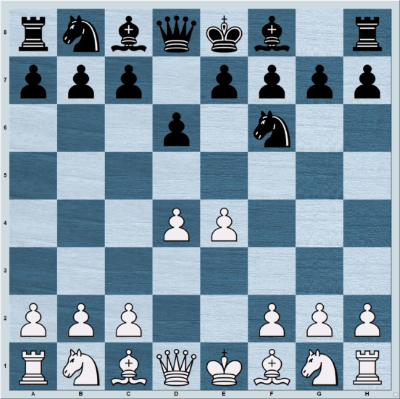
High-level players play this opening more rarely than Sicilian or Caro Kann, as there are certain problems in the opening. We've covered that in our course on the Pirc Defense.
However, if the tournament situation makes you play for a win, Pirc Defense becomes a good choice.
Is Petroff Defense a good or bad opening?
GM Fabiano Caruana plays Petroff against top-level Grandmasters, where the draw result is fine for him, and as he plays plenty of lines, he has to memorize really long lines to end the game in a draw.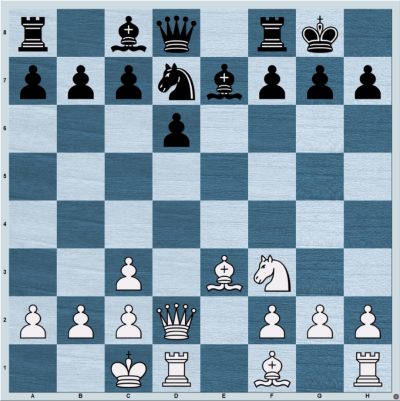
This is one of the main positions in Petroff Defense. Here Caruana plays 9...Nf6 and then 10.Bd3 c5. When I was analyzing this position I found around ten lines for White, after which Black has no choice other than making moves that will lead the game to a draw.
Caruana is super-talented, has an amazing memory, and it’s fine for him to draw against Carlsen.
If you want to learn Petroff Defense and play Caruana’s lines, you should learn, analyze very deeply, and memorize many lines. Are you ready to do such tremendous work? If yes, Petroff is good for you.
Is Stonewall Dutch a good or bad opening?
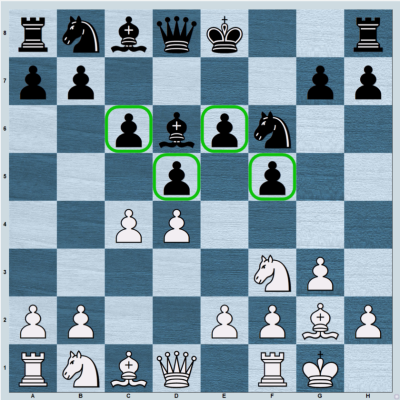
If you are an aggressive player, this isn’t a good opening to play. But suppose you like positional chess, and tomorrow you are playing an aggressive opponent. In that case, this is a very good choice, as 90% of the time, the game will continue in a positional direction.
Is Benko Gambit a good or bad opening?
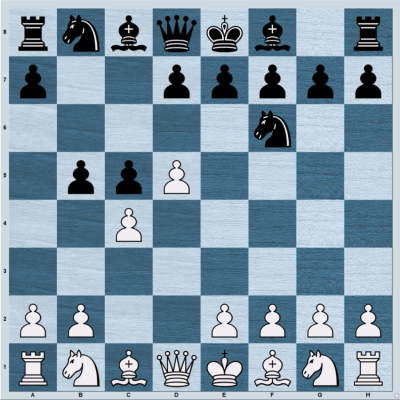
If you play against a 2600+ Grandmaster, you may have problems in the opening. But if you are playing against someone who doesn’t have good opening preparation and doesn’t like to play against the initiative, Benko Gambitis a superb choice.
If you are a Grandmaster, it might be better to learn, for example, an opening like Nimzo Indian. But if your rating is 2000 below and your goal is to get 2300, learning Benko Gambit is a perfect choice! It's very easy to learn, and you’ll develop a lot of skills in chess such as feeling the pieces, activity, open lines, and many more.
These were just a few examples, and as you can see, when you ask, "What are the best openings?" you should specify and add more information to your question.
Here are some examples of good, specified questions.
1. I am an 1800 player. I don’t have more than 2 hours to dedicate to studying chess in a day. What openings should I learn?
2. I am a 2200 player. I like aggressive chess. What openings should I learn?
3. I am a 2000 Player, I play chess for fun, but I need to learn some openings. What would you recommend?
4. It’s hard for me to remember stuff (my memory is not good), and I don’t want to get an advantage from the opening. I just want to get fighting positions. What openings should I learn?
5. I am 2480 with 2 GM norms. Against 1.d4, my main opening is Queen Gambit, but I have problems with winning players weaker than me. What opening should I learn for getting fighting positions, even if they are a bit risky?
These are excellent questions, and getting answers to these questions is essential.
You don’t know who to ask? Well, if you can specify your question like in the examples above, I’ll be happy to guide you. Feel free to post in our forum. that's all check out other forums for more information. P.S
You may also like
 jeremiah1234
learn from your mistakes.
if you try YOU WILL SUCCEED. jeremiah1234
i have really good crazy house moves
(they work best i crazy house one you can only do in crazy house) jeremiah1234