
Six Hours at 300 km/h: Chess, Trains, and a New Year in Xi’an
Leaving Beijing behind, I didn’t just change cities — I changed pace. The journey to Xi’an compressed distance, time, and routine into a single day spent moving at 300 km/h, thinking in chess patterns, and preparing for a New Year far from home. This part of the journey is about speed and stillness, about how training travels with you, and how history can wait patiently while you arrive on time.
Introduction
In the first part of this story, I wrote about arriving in China and discovering Beijing for the first time. This second chapter begins on a train platform and ends among ancient warriors made of clay. Somewhere in between, there is chess — played at 300 km/h, between stations, meals, and a New Year’s Eve unlike any I had experienced before.
(Read the first part here.)
From Beijing to Xi’an, at Full Speed
On the morning of December 31st, we arrived at one of Beijing’s massive railway stations. Calling it a “station” feels insufficient — it was more like an airport designed exclusively for trains. Security checks, waiting halls, clear signage, and a constant sense of movement. Everything was calm, efficient, and fast.
Our train was a high-speed G-train, capable of running at 300 km/h. The idea that we were about to cross half of China in six hours still felt unreal. Once on board, the ride was so smooth that speed became an abstract concept; the only reminder was the digital display showing numbers that would look impossible anywhere else in Europe.
Chess at 300 km/h
One of the things that surprised me most was how integrated technology is into daily life. In the train, you can order food directly to your seat — and not just snacks. Full meals arrive from the next station, synchronized with the train’s schedule.
While waiting, I opened LiChess.
I started with Puzzle Storm, pushing my concentration while the landscape outside blurred into fields and cities. Then I played a few blitz and bullet games, adjusting to the rhythm of fast decision-making, which felt strangely aligned with the speed of the train itself.
Later, I spent time analyzing games from the World Rapid and Blitz Championship. Watching top players make precise decisions under extreme time pressure, while I myself was moving through China at 300 km/h, created a strange but memorable parallel: speed doesn’t remove depth — it demands clarity.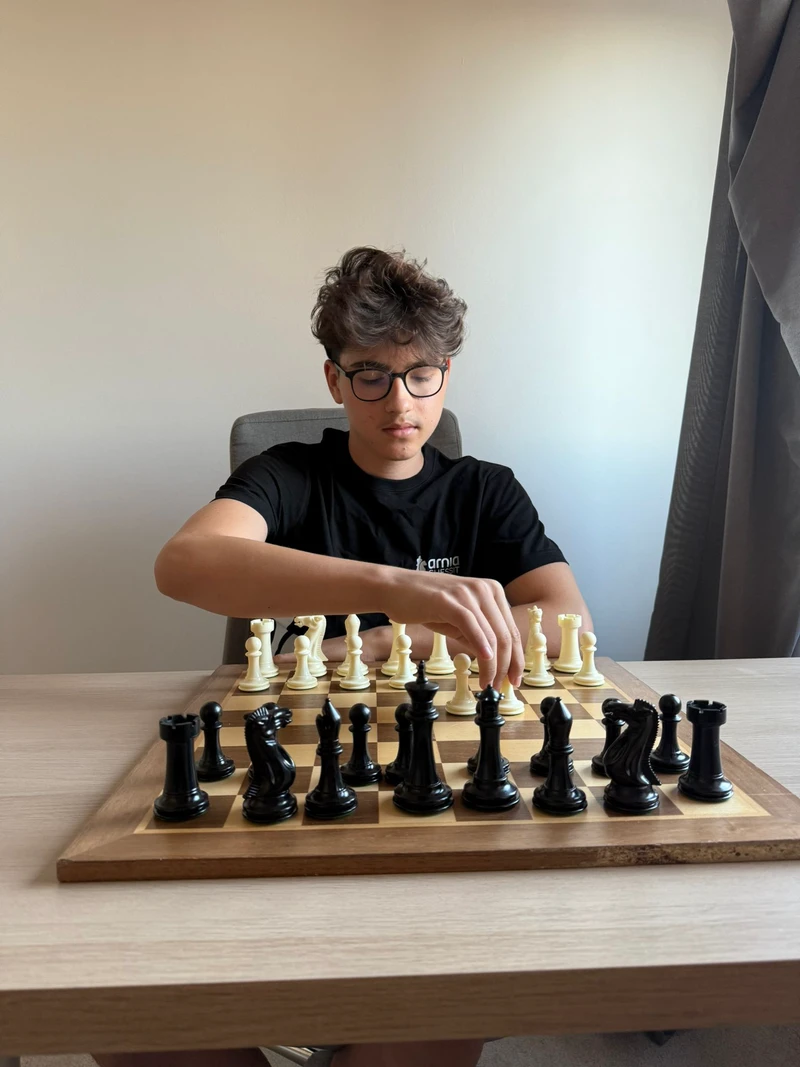
Arrival in Xi’an
We arrived at Xi’an North Railway Station around 16:00, another impressive hub where everything moved quickly yet without visible stress. By 18:00, we were already checked in at the hotel.
Xi’an immediately felt different from Beijing. Older. Warmer. More human in scale.
Because it was New Year’s Eve, the city was crowded, alive, and partially restricted to traffic. Instead of fighting it, we embraced it. Our hotel was close to the Muslim Quarter, which made the decision easy.
New Year’s Eve in the Muslim Quarter
That evening, I walked through narrow streets filled with lights, food stalls, voices, and smells I had never experienced before. The Muslim Quarter is not just a tourist attraction; it feels like a living layer of the city, where history and everyday life mix naturally.
I had dinner at a small local restaurant — simple, authentic food — and later tried Xi’an’s famous Chinese burger (roujiamo), which deserves its reputation. Walking through the old city at night, surrounded by red lanterns and constant movement, I felt that Xi’an doesn’t need fireworks to celebrate a new year. Its history already does that.
Training Before History
The next morning, before leaving for the Terracotta Army, I followed my usual routine. Travel changes locations, not discipline.
I reviewed my PlayBook for the black pieces on Chessable, focusing on structure and typical plans. I followed that with another Puzzle Storm session and played ten blitz games, keeping my mind sharp before a long cultural day.
Chess gives structure to unfamiliar environments. No matter where I am, the board remains the same.
The Terracotta Army
Visiting the Terracotta Army is overwhelming, even if you’ve seen it in pictures. The scale is impossible to prepare for. Thousands of soldiers, each different, each facing forward, frozen in a formation designed over two thousand years ago.
We visited all three pits, slowly, without rushing.
One of the most human moments came when I took a photo with Yang Zhifa, the farmer who discovered the army in 1974 while digging a well. His story is simple and extraordinary at the same time — an accidental discovery that changed history, archaeology, and his own life forever.
Standing there, I couldn’t help thinking about preparation, patience, and unseen work — ideas that also exist in chess, just expressed differently.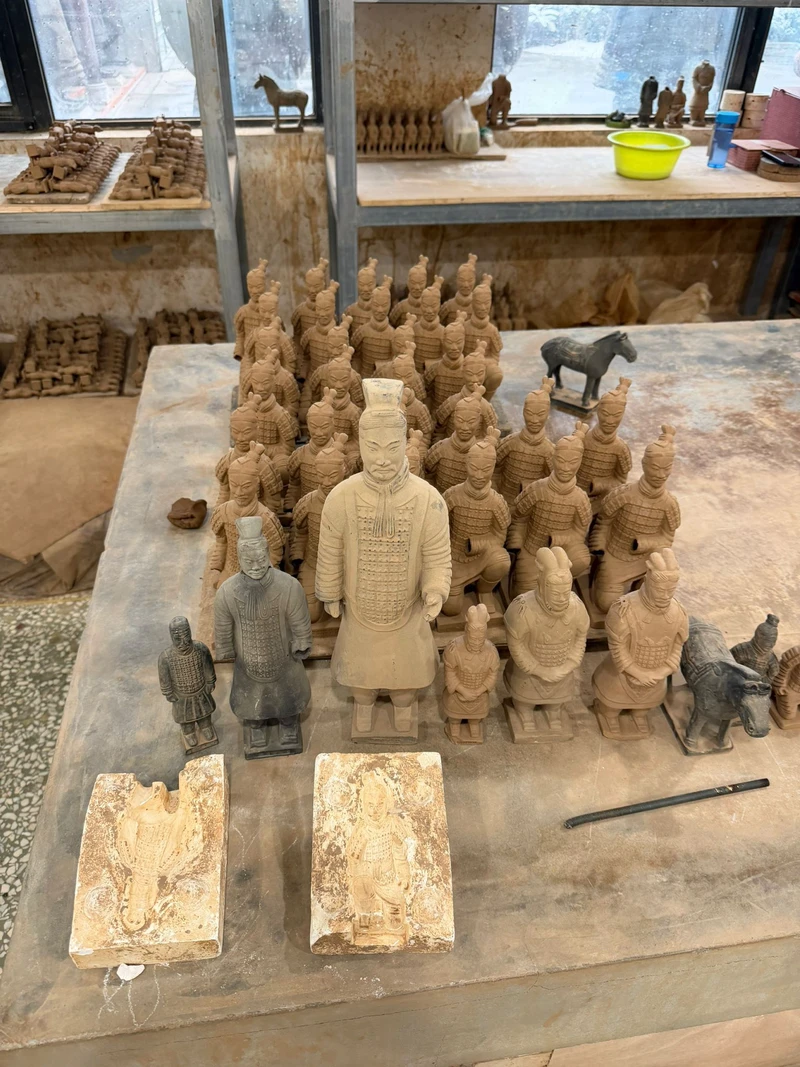
Ending the Day
The day ended quietly, with another local dinner and one last walk through the city. The next morning, we would leave for Shanghai, opening a completely new chapter of the journey.
Xi’an had given me history, rhythm, and perspective.
And I went to sleep knowing that the next move was already prepared.
You may also like
 CM Robert_Sava
From Bucharest to the Heart of China
When I boarded the plane in Bucharest, I knew I was flying far. What I didn’t know was how quickly C… CM Robert_Sava